
There’s a persistent belief in home improvement that meaningful results require significant investment — a renovation, a new furniture set, a professional decorator. It’s an assumption the industry benefits from and homeowners rarely question. But spend enough time around people who actually understand how spaces work and a different pattern emerges: the changes that transform a room most dramatically are often the smallest ones applied in exactly the right place.
Not small in terms of impact. Small in terms of cost, effort, and scope. A single light fixture replaced. One wall painted. A rug sized correctly for the first time. A mirror positioned where it doubles the perceived depth of a room. These aren’t finishing touches — they’re often the pivotal decisions that determine whether a space feels designed or assembled.
The question isn’t whether one small change can transform a space. It’s which small change is the right one for your specific room — and why the same intervention that transforms one space does almost nothing in another. This article answers both. We’ll cover the small changes with the highest proven impact, why they work, how to identify which one your room actually needs, and what makes a targeted single change outperform scattered multiple improvements every time.
Why One Small Change Often Outperforms Multiple Simultaneous Improvements
The instinct when a room isn’t working is to change several things at once. New cushions, a different rug, some artwork, a plant. The result is a room with five new things in it that still doesn’t feel right — because the underlying problem wasn’t addressed, just surrounded by additions.
One deliberate small change applied to the actual source of the problem produces clearer results than multiple changes applied to symptoms. It also makes the cause-and-effect relationship visible in a way that scattered improvements don’t, which informs every subsequent decision about the space.
| Approach | What It Produces | Why It Falls Short |
|---|---|---|
| Multiple simultaneous changes | Unclear what worked, what didn’t | Can’t identify effective interventions |
| Decorative additions without diagnosis | New items in a room that still doesn’t work | Problem unaddressed, just surrounded |
| One deliberate targeted change | Clear result, clear learning | Requires correct diagnosis first |
| Full room redesign | Complete result but high cost and effort | Often unnecessary for most rooms |
| Following trends without purpose | Room looks current but still off | Trend ≠ solution to the actual problem |
The Small Changes With the Highest Room-Transformation Impact
Replacing One Light Fixture
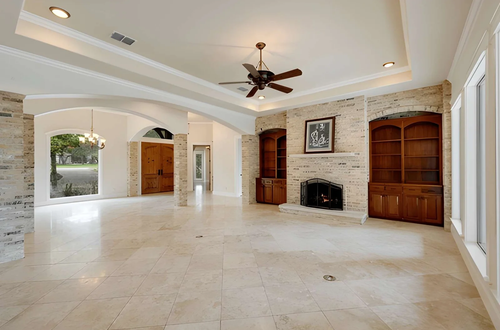
If there’s a single small change that consistently transforms how a room feels without touching furniture, walls, or layout — it’s swapping a builder-grade ceiling fixture for one with actual design intention. The overhead light is what most people look at first when they enter a room, even if they don’t consciously register it. A flat, round, contractor-grade flush mount communicates that no design decision was made here. A pendant, a statement semi-flush, a sculptural fixture — any of these signals that the room was thought about.
The cost for a quality replacement fixture runs $80 to $300 at most US retailers. Installation is a straightforward electrical swap for anyone comfortable with basic wiring, or a $75 to $150 electrician visit. The visual return on that small change is disproportionate to what it costs.
| Fixture Swap | Cost Range | Visual Impact | Difficulty |
|---|---|---|---|
| Builder flush mount → pendant | $80–$250 | Very High | Low-Medium |
| Generic ceiling fan → styled fan | $120–$300 | High | Medium |
| Basic sconce → statement sconce | $60–$180 | High | Low |
| Standard bulbs → warm LED | $15–$40 | Medium-High | Very Low |
| No dimmer → dimmer switch | $15–$40 | High | Low |
Repainting One Wall
Not the whole room. One wall — specifically the wall that anchors the room’s primary seating or the wall most visible from the entry point. A single painted accent wall in a deep, considered color does something a full room paint job doesn’t always achieve: it gives the room a focal point and a sense of direction without the commitment or cost of painting everything.
The paint itself costs $30 to $60 for a gallon. A single wall takes two to three hours. The result is a room that reads as intentional in a way it didn’t before — and that’s a significant small change for under $100.
Correct Rug Sizing
This is the most common small change that’s actually a correction. The majority of US living rooms have a rug that’s too small — and a correctly sized rug is one of those interventions that makes everything else in the room suddenly look better without anything else changing.
When a rug is properly sized — large enough for at least the front legs of every seating piece to sit on it — the furniture group looks anchored, the room looks larger, and the space reads as designed rather than furnished. When a rug is too small, every piece of furniture above it looks like it’s floating independently rather than belonging to a composed group.
| Room | Minimum Rug Size for Correct Proportion | Common Undersized Mistake |
|---|---|---|
| Small living room | 6×9 | 4×6 or 5×8 |
| Medium living room | 8×10 | 6×9 |
| Large living room | 9×12 or larger | 8×10 |
| Dining room (seats 6) | 8×10 minimum | 6×9 that chairs slide off |
| Primary bedroom (queen) | 8×10 or 9×12 | 5×8 under bed only |
| Home office | 6×9 minimum | Small mat under desk only |
Adding or Repositioning a Mirror
A mirror in the right location is one of the most effective small changes for making a room feel larger, lighter, and more finished. Positioned opposite a window, it reflects natural light into the room’s darker areas. Placed at the end of a narrow hallway, it adds perceived depth that removes the tunnel effect. Hung above a sideboard or fireplace, it gives the wall a focal point that anchors the furniture below it.
The mirror itself doesn’t need to be expensive. A well-framed mirror from $40 to $150 does the same optical work as one that costs ten times more. The placement matters more than the price.
How to Identify Which Small Change Your Room Actually Needs
The correct small change for a specific room depends on diagnosing what’s actually wrong — not what’s most recently bothered you or what the latest trend suggests. A simple diagnostic framework:
If the room feels dark and flat: The problem is almost certainly lighting. The small change is either a fixture replacement, a lamp addition, or a bulb temperature swap to warmer tones.
If the room feels unfinished despite having all the right furniture: The problem is usually a missing anchor — either the rug is the wrong size, there’s no artwork creating a focal point, or the lighting hasn’t been addressed.
If the room feels cold and uninviting despite decent furniture: The problem is texture and warmth. A single small change — adding a correctly weighted throw, swapping to warmer bulbs, introducing one plant — resolves this faster than any furniture change.
If the room feels generic and impersonal: The problem is specificity. One piece of meaningful artwork, one collected object, one element that reflects the household’s actual taste does more than any amount of trend-aligned purchasing.
| Room Symptom | Likely Root Cause | Highest-Impact Small Change |
|---|---|---|
| Dark and flat | Lighting deficiency | Fixture swap or lamp addition |
| Unfinished despite furniture | Missing anchor element | Correct rug sizing or focal point artwork |
| Cold and uninviting | No texture or warmth | Throw, plant, or warm bulb swap |
| Generic and impersonal | No specificity | One meaningful artwork or personal object |
| Cluttered despite cleaning | Too many items, no editing | Remove before adding |
| Furniture floating | Rug too small | Size up the rug |
| Ceiling feels low | No vertical elements | Curtains hung high, tall plant, vertical art |
Frequently Asked Questions
What is the single most impactful small change for most US living rooms?
Correct rug sizing. It’s the most widespread problem, it affects how every other element in the room reads, and fixing it immediately makes the space look more designed without changing anything else. The second most impactful is lighting — specifically replacing builder-grade overhead fixtures and adding warm-toned lamps.
How do I know which small change will actually transform my specific room?
Photograph the room from the doorway and look at the image objectively — the camera removes the familiarity that makes problems invisible when you’re standing in the space. Ask what draws your eye for the wrong reason. That’s your starting point. One honest diagnosis beats ten decorating tip lists.
Can a single paint color really transform a room?
Yes — particularly a deep, saturated accent color on one wall in a room that was previously all neutral. The focal point it creates changes how the whole room reads without requiring any other change. The caveat: test the color in the actual room with the actual light before committing. Paint colors behave differently in different light conditions.
Is it worth spending on one quality piece versus several budget pieces?
Almost always yes. One well-chosen light fixture, one correctly sized rug, or one piece of meaningful artwork does more for a room than several budget purchases that each add something minor. The “invest in a few things rather than many” principle consistently produces better results in home design than spreading the same budget across more items.
What small changes have the best resale value impact?
Updated lighting fixtures, fresh paint in current neutral tones, and correctly sized rugs all improve how a home photographs and shows — both of which affect buyer perception and therefore resale value. These are also among the lowest-cost interventions available, which makes them the highest-ROI small changes for homeowners thinking about eventual sale.
The Bottom Line
The most transformative home improvement you can make isn’t always the most expensive or the most extensive. It’s the right small change applied to the actual problem your room has — not the problem that’s easiest to address or most fun to shop for.
Diagnose before you decorate. Identify the one element that’s doing the most damage to how your space reads and fix that first. A correctly sized rug, a replaced light fixture, one painted wall, or a mirror in the right location — any of these, applied deliberately, changes a room more than a collection of additions that circle around the real issue without addressing it.
One right small change beats ten wrong ones. Every time.
Must visit https://decoratoradvice.ca/ for small home transformation.