Every year brings a new wave of decoration trends — and every year, a significant number of US homeowners redecorate based on what’s popular rather than what actually suits them, their home, or how they live. Six months later, the room feels like someone else’s space. The trend moved on and the room didn’t move with it, leaving behind a look that feels dated before it ever felt truly personal.
The problem with following a decoration trend isn’t the trend itself. Most current trends have genuine aesthetic merit. The problem is applying a trend without first asking whether it fits the person who has to live with it — their personality, their daily routines, their existing home architecture, and the way they actually use each room.
A trend that works beautifully in a light-filled California bungalow might feel oppressive in a north-facing apartment in Chicago. A maximalist approach that energizes a creative professional might exhaust someone who needs their home to function as a quiet retreat.
This article covers how to evaluate any decoration trend against your actual lifestyle and home conditions, which current trends suit which personality types and home configurations, and how to incorporate a trend in a way that lasts longer than the trend itself.
Why Most Decoration Trends Don’t Last in Real Homes
Understanding why trends fail to stick in real homes is the starting point for choosing one that will. Trends circulate through design media at a pace that doesn’t match how people actually live — or how long home improvements are expected to last.
| Why Trends Fail in Real Homes | What It Produces |
|---|---|
| Chosen for visual appeal, not functional fit | Beautiful room that’s impractical to live in |
| Applied wholesale rather than selectively | Room feels like a themed installation, not a home |
| Conflicts with existing architecture | Trend fights the bones of the space |
| Suits photography, not daily experience | Looks good in photos, feels wrong in person |
| No personal connection to the aesthetic | Feels like someone else’s taste after 3 months |
| Ignores how the household actually uses the space | Styled for a use case that doesn’t reflect reality |
The decoration trend that lasts in a real home is almost never the one that looked best on the design blog. It’s the one that aligned with how the household actually functions and what the people living there genuinely respond to aesthetically — which requires self-knowledge before it requires trend awareness.
How to Match a Decoration Trend to Your Actual Lifestyle
Before evaluating any specific trend, answer three questions honestly:
How do you use your home most? A household that entertains frequently has different needs than one that primarily uses the home as a quiet retreat. A family with young children needs spaces that can withstand daily use. Someone working from home needs spaces that support focus without visual distraction.
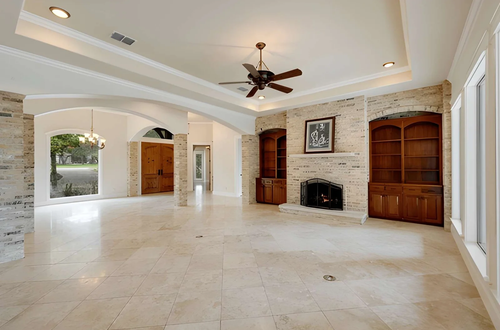
What does your home’s architecture support? High ceilings and large windows support trends that rely on drama and visual scale. Low-ceilinged spaces work better with trends that emphasize intimacy and warmth. Open floor plans behave differently from compartmentalized room layouts.
What do you respond to emotionally, not just visually? There’s a difference between finding a room beautiful in a photo and finding it comfortable to live in. Spare, minimal spaces photograph exceptionally. They can feel cold and echoey in person. Dense, layered spaces feel rich and personal in photographs. They can feel chaotic and hard to maintain daily.
Current Decoration Trends Matched to Personality and Home Type
Quiet Luxury
Characterized by neutral palettes, high-quality materials, restrained ornamentation, and an emphasis on texture over color. This decoration trend suits homeowners who find calm in visual order, who invest in fewer but better things, and whose homes have good natural light that allows tonal variations to read clearly.
It doesn’t suit households with young children in primary spaces, homeowners who find neutral environments depressing rather than calming, or homes with poor natural light where the tonal palette flattens.
| Quiet Luxury Works For | Quiet Luxury Doesn’t Work For |
|---|---|
| Adults-only households | Families with young children in main spaces |
| High natural light interiors | North-facing or basement rooms |
| Homeowners who love texture | Those who respond to color for energy |
| Minimalist personalities | Collectors and sentimental decorators |
| Long-term investment in quality | Frequent redecorators on tighter budgets |
Maximalism and Curated Clutter
The deliberate layering of pattern, color, and collected objects into spaces that feel personal and visually dense. This decoration trend suits people who are energized rather than drained by visual richness, who have genuine collections worth displaying, and whose homes have architectural character that benefits from layering.
It fails when the layering is aspirational rather than authentic — when objects are accumulated to achieve a look rather than because they carry meaning. Curated clutter that isn’t actually curated is just clutter.
Biophilic Design
Bringing natural materials, plant life, natural light, and organic forms into interior spaces. This decoration trend suits almost any personality type because it works at different intensities — from a single large plant and natural wood accents to a fully plant-integrated interior with living walls and stone surfaces.
Its primary constraint is maintenance commitment. A biophilic interior requires ongoing plant care. Homeowners who consistently let plants die aren’t suited to this trend at full intensity, regardless of how much the aesthetic appeals to them.
| Decoration Trend | Best Personality Fit | Best Home Type | Maintenance Level |
|---|---|---|---|
| Quiet luxury | Order-oriented, investment-focused | High light, clean architecture | Low |
| Maximalism | Expressive, collector, creative | Architectural character, varied spaces | Medium-High |
| Biophilic design | Nature-connected, nurturing | Any, with adequate light | Medium-High |
| Japandi (Japanese-Scandinavian) | Calm-seeking, functional | Open plan, good light | Low |
| Coastal grandmother | Nostalgic, comfort-oriented | Casual, relaxed architecture | Low-Medium |
| Industrial | Urban, contemporary, minimalist | Loft, open plan, commercial elements | Low |
| Dark academia | Intellectual, introverted, literary | Older homes, rich architecture | Medium |
Japandi
The hybrid of Japanese minimalism and Scandinavian functionality. This decoration trend suits homeowners who want simplicity without coldness — spaces that are uncluttered but warm, functional but beautiful. It works exceptionally well in open-plan US homes where visual continuity across spaces matters.
Its failure point is rigidity. Japandi requires ongoing editing — not buying new things, but consistently removing things that accumulate. Homeowners who struggle with that level of discipline find the look slides toward generic minimalism within months.
How to Incorporate Any Decoration Trend Without Over-Committing
The safest way to adopt a decoration trend without creating a room you’ll want to undo in a year: apply it through removable elements first.
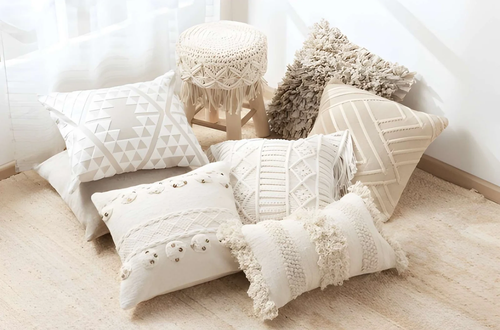
Cushions, throws, rugs, plants, and artwork carry trend influence without structural commitment. Paint is the most permanent accessible change and even that reverts with a few hours of work. Furniture is where trend investment carries the most risk — a sofa in a trending shape or color is a five to ten year commitment to that trend’s continued relevance.
| Element | Trend Commitment Level | Reversibility | Cost to Change |
|---|---|---|---|
| Cushions and throws | Low | Very Easy | $20–$100 |
| Plants and vessels | Low | Easy | $15–$80 |
| Artwork | Low-Medium | Easy | $30–$200 |
| Rugs | Medium | Moderate | $60–$300 |
| Paint | Medium | Moderate effort | $40–$100 |
| Light fixtures | Medium-High | Requires some work | $80–$300 |
| Furniture | High | Difficult, costly | $300–$3,000+ |
Frequently Asked Questions
How do I know which decoration trend actually suits me?
Start with behavior, not aesthetics. How do you use your home? What drains you versus energizes you in a space? What does your home’s architecture support? The trend that fits those answers is the one worth considering. If a trend requires you to change how you live rather than improving how you live, it’s the wrong trend for you.
How long do decoration trends typically last?
Major trends cycle every five to eight years at the macro level, with micro-trends surfacing and disappearing in twelve to twenty-four months. Investing heavily in a micro-trend — a specific color, a very particular furniture shape — carries the most obsolescence risk. Investing in a broader aesthetic direction that resonates personally carries significantly less.
Is it a mistake to follow decoration trends at all?
No — if the trend genuinely resonates with your personality and suits your home’s conditions. The mistake is following a trend because it’s popular rather than because it fits. A decoration trend applied because it’s everywhere becomes dated the moment it stops being everywhere. One applied because it genuinely reflects your taste remains relevant indefinitely.
What if I like elements from multiple decoration trends?
That’s the most common and most sustainable position. Most homes that feel genuinely personal borrow from several trends rather than committing wholesale to one. Quiet luxury’s material quality, biophilic design’s plant integration, and Japandi’s editing discipline can all coexist in one space — because they share underlying principles rather than conflicting aesthetics.
How do I stop being influenced by trends I see online?
Introduce a time delay between discovering something and acting on it. Save images of rooms you love without buying anything for thirty days. At the end of that period, the trends that still resonate are ones with genuine personal appeal. The ones that don’t — micro-trends, algorithmic content, things that looked interesting for a moment — will have already faded.
The Bottom Line
The right decoration trend for your home isn’t the one that’s most popular, most photographed, or most recommended. It’s the one that suits how you actually live, what your home’s architecture genuinely supports, and what you respond to emotionally beyond what looks good on a screen.
Evaluate before you adopt. Apply through low-commitment elements first. Invest in furniture and permanent changes only when a trend has proven it fits your life across multiple seasons. And when in doubt, the most enduring design principle isn’t a trend at all — it’s knowing what you actually like and building a home around that rather than around what’s current.
For more decoration trends must visit https://decoratoradvice.ca/