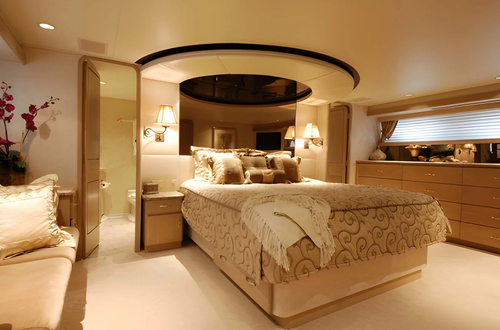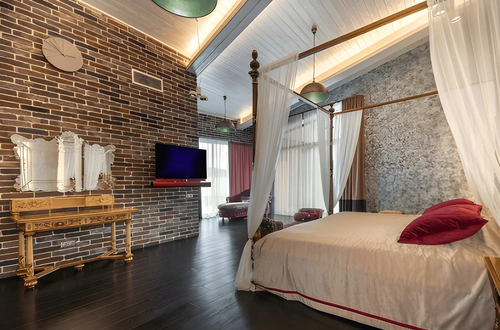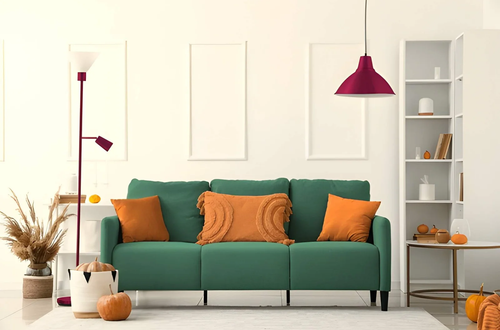
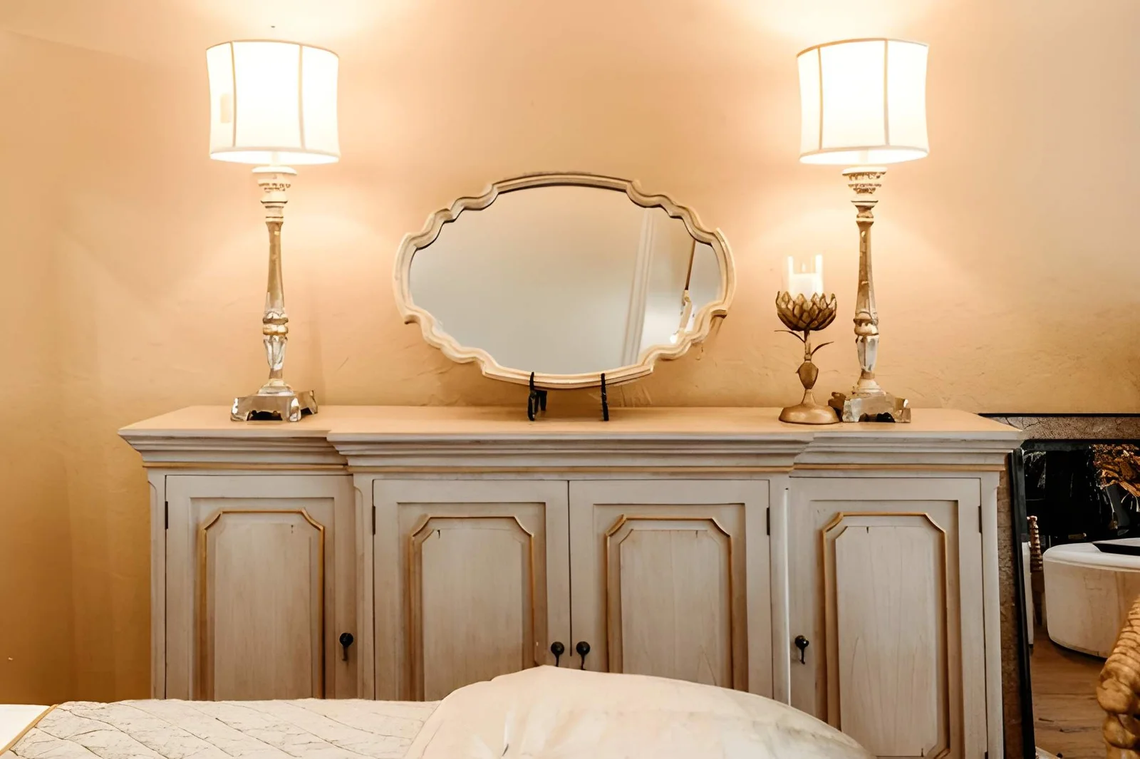
There’s a quality that the most compelling contemporary interiors share — a layered, lived-in richness that all-new rooms rarely achieve regardless of budget. Walk into a space where everything was purchased at once, from contemporary retailers, and it can look polished and correct while feeling somehow flat. Walk into a space where thoughtfully chosen antique accessories appear alongside contemporary furniture and you feel something different: the sense that this room has depth, that it’s been accumulated rather than installed, that real life and real history are present in it.
This quality — the specific character that antique accessories contribute to contemporary interiors — is increasingly recognized in US design as one of the most effective and most accessible ways to make modern rooms feel genuinely personal. The mixing of periods has moved from eclectic exception to mainstream design strategy, endorsed by designers from Kelly Wearstler to Ilse Crawford. And while the best examples look like they happened naturally, the approach is learnable.
This article covers why antique accessories work in contemporary settings, which types produce the best results, how to integrate them without creating visual chaos, and where US homeowners can find them without specialist expertise or large budgets.
Why Antique Accessories Add What Contemporary Rooms Lack
Contemporary interiors — however beautiful — are typically designed to minimize evidence of time. Clean lines, consistent materials, new finishes. The aesthetic coherence this produces is real, but it comes at a cost: the room has no depth in the temporal sense. Everything in it was new at approximately the same time, which is not how any room that’s been loved and inhabited actually looks.
Antique accessories introduce the temporal dimension that new objects can’t provide. They carry visible evidence of time — patina on metal, wear patterns in wood, the slightly imprecise quality of handmade objects — that the brain processes as history and warmth. The contrast between an old object and a clean contemporary setting doesn’t create conflict; it creates conversation. The old object makes the contemporary setting look more deliberate. The contemporary setting makes the old object look more distinctive.
| What Antique Accessories Add | Why It Works in Contemporary Rooms |
|---|---|
| Visible patina and aging | Contrast with clean contemporary surfaces creates depth |
| Material quality (pre-industrial craft) | Handmade objects have variation that manufactured ones lack |
| Personal specificity | Selected objects signal individual taste, not retail browsing |
| Temporal layering | Room reads as accumulated, not installed |
| Cultural reference | Objects from different periods reference history without historicism |
| Unpredictability | Contemporary rooms gain the surprise element that uniformity lacks |
| Sustainability narrative | Reused objects carry an authenticity new objects can’t claim |
The Antique Accessories That Work Best in Contemporary Interiors
Ceramics and Pottery: The Most Universally Compatible Category
Antique ceramics — whether European studio pottery, Asian export ware, American art pottery, or utilitarian vessels from any culture — are the category of antique accessories most consistently at home in contemporary interiors. The reason is formal: ceramic forms are fundamentally simple (vessels, plates, figurines) in a way that translates across periods and styles without period-specific ornament requiring contextual knowledge to appreciate.
A Han Dynasty ceramic jar from 200 BCE looks perfectly at home on a contemporary Scandinavian-influenced shelf because both share an interest in material quality, restrained form, and the relationship between object and negative space. A piece of American art pottery from the early 20th century shares the organic, handmade quality that contemporary design consistently references without being tied to its period’s ornamental vocabulary.
The market for antique ceramics in the US is particularly accessible: estate sales, thrift stores, and antique markets routinely offer quality pieces for $20 to $200 that would retail for multiples of that in design boutiques as “ceramic objects.”
| Antique Ceramics Category | Period | Average US Market Price | Contemporary Compatibility |
|---|---|---|---|
| American art pottery (Rookwood, Roseville) | 1890–1940 | $30–$300 | Very High — organic forms suit contemporary |
| Chinese export porcelain | 1700–1900 | $20–$500 | High — pattern works as accent |
| European studio pottery | 1920–1970 | $50–$400 | Very High — modernist forms |
| Folk pottery (American, regional) | Various | $15–$150 | Very High — handmade quality |
| Japanese ceramics | Various | $30–$600 | Very High — wabi-sabi aesthetic |
| Industrial/utilitarian stoneware | 1800–1950 | $10–$80 | Very High — simple forms |
Antique Mirrors: The Accessory That Does Double Duty
Antique accessories with functional value are the easiest integrations — and antique mirrors are the category that best demonstrates this. A contemporary room with a foxed, gilded, or simply aged mirror frame gets two things simultaneously: the light-amplifying, space-expanding function that any mirror provides and the material specificity and character that only an aged, handmade object carries.
The contrast between an elaborately framed antique mirror and a clean contemporary wall is one of the most reliably effective antique accessories integrations available. The mirror doesn’t need to “match” anything else in the room — its role is precisely to be different from everything else, which is what makes the contrast productive rather than confusing.
Books as Antique Accessories
Older books — not as decorative props but as objects with readable spines, evidence of use, and the physical presence of pre-digital publishing — function as antique accessories that most US homeowners already have access to and rarely think of in design terms.
A shelf with contemporary objects punctuated by older books (cloth-bound spines, gold lettering, the slight yellowing of aged paper visible at the page edges) has a layered quality that a shelf of all-new objects or all-new books doesn’t achieve. The books’ age is visible; it signals that the person who lives here has accumulated things over time rather than simply purchased a complete set.
How to Integrate Antique Accessories Without Visual Chaos
The risk most homeowners perceive in mixing antique accessories with contemporary design is creating visual chaos — the miscellaneous quality that comes from objects that don’t relate to each other or to the room’s overall direction.
The principle that prevents this: coherence through quality and restraint rather than through matching period or style. Antique accessories that work in contemporary rooms are well-made, interesting at close examination, and present in appropriate numbers. Three carefully chosen antique accessories have the desired effect. Fifteen undifferentiated antique objects have the opposite — the room reads as collected in a way that suggests inability to edit rather than sophisticated taste.
| Integration Principle | What It Looks Like in Practice | What to Avoid |
|---|---|---|
| Quality over quantity | 3–5 significant pieces vs. many minor ones | Filling shelves with quantity of antiques |
| Related material language | All metal antiques, or all ceramic, or all wood | Mixing every category simultaneously |
| Scale consciousness | One large statement piece + small accents | All same scale — no visual hierarchy |
| Restraint in display | Antiques as focal points, not background noise | Antiques on every surface competing |
| Contemporary context maintained | Antiques in predominantly contemporary setting | Period room effect — antiques overwhelm |
| Personal connection | Objects acquired through experience or meaning | Objects chosen purely as decoration props |
Where US Homeowners Find Quality Antique Accessories
| Source | Price Range | Quality Range | Expertise Required |
|---|---|---|---|
| Estate sales | Very Low–High | Low–Excellent | Some — early arrival helps |
| Thrift stores (Goodwill, Salvation Army) | Very Low | Low–Medium | Regular visiting required |
| Antique markets (local fairs) | Low–Medium | Medium–High | Some negotiation useful |
| Online (eBay, Etsy, Chairish, 1stDibs) | Low–Very High | Full range | Photo research needed |
| Auction houses (regional) | Medium–High | Medium–Excellent | Inspection opportunity |
| Family inheritance | Zero cost | Sentimental–Excellent | Zero — these are the best sources |
| Architectural salvage dealers | Low–Medium | Medium–High | Good for architectural elements |
Estate sales remain the most consistently productive source for US homeowners seeking quality antique accessories at accessible prices. A single weekend of estate sale attendance can yield more interesting pieces than months of retail browsing — and at prices that make experimentation low-risk.
Frequently Asked Questions
Do antique accessories work in minimalist contemporary interiors?
Especially in minimalist interiors — because the negative space of minimalism makes each object more significant. In a room with few objects, one antique accessory of genuine quality and character becomes a focal element that a room full of objects would absorb. Minimalism amplifies the impact of antique accessories rather than conflicting with them.
How many antique accessories is the right number for a contemporary room?
There’s no fixed answer, but three to five significant pieces in a primary room produces the character benefit without the period-room risk. The key is that each piece is genuinely interesting — selected for its own specific quality rather than as a category addition. Three carefully chosen antique accessories do more than fifteen accumulated ones.
What antique accessories should US homeowners avoid in contemporary settings?
Heavily ornate pieces with period-specific ornamental vocabulary that reads as historicism — Victorian elaborately carved furniture in a contemporary room, for example — tend to fight the contemporary context rather than enrich it. The antique accessories that work best are either formally simple enough to transcend their period (simple ceramics, quality textiles, plain-frame mirrors) or bold enough that the contrast is the point.
Is mixing antique accessories with contemporary furniture a current trend or a lasting approach?
It’s a lasting approach that’s been practiced in sophisticated interiors for decades and is currently being more widely adopted. The reason it’s lasting rather than trending: it solves a real problem that all-contemporary rooms have (temporal flatness, lack of specificity) through a means that doesn’t require following any particular style direction. As long as contemporary interiors exist and as long as objects from the past exist, the productive mixing of the two will remain relevant.
Where do I start if I’ve never bought antique accessories before?
Start at an estate sale with a specific category in mind — ceramics, mirrors, or books — and a budget of $50 to $100. Buy only what you find genuinely beautiful or interesting, not what seems like it might work. The antique accessories that succeed in contemporary interiors are almost always ones that were acquired because they were compelling rather than because they seemed like appropriate décor choices.
The Bottom Line
Antique accessories give contemporary interiors the one quality that new objects categorically cannot: temporal depth. The patina of an aged ceramic, the scale of an antique mirror, the material specificity of a pre-industrial object — these contribute a character dimension to contemporary rooms that no amount of new purchasing can replicate.
The approach isn’t complicated: choose a few pieces of genuine quality, allow them to contrast with the contemporary setting rather than trying to make them match it, and resist the urge to fill every surface with antiques when the goal is enrichment rather than period decoration.
The result — a contemporary room with visible history in it — is one of the most compelling interior effects available to US homeowners, and one of the most accessible. Estate sales, thrift stores, and family inheritance make the source material available at every budget level. The design knowledge required is simply this: old objects and new settings can coexist beautifully when each is well-chosen and neither is trying to be the other.
Must visit https://decoratoradvice.ca/ for antique accessories interiors.