At noon, your living room window feels private. Passersby see glare and reflections, not you. By 7 p.m., with the lamps on and the sky dark, that same window turns into a stage. Nothing about the glass changed. The light did. That daily flip is why one curtain rarely solves the problem, and why many people end up keeping blinds shut all day. If you want to know how to choose window treatments when privacy changes throughout the day, start by working out when you are visible and why, then match the treatment to those hours. This guide covers the day-night privacy flip, a comparison of common treatments, a time-of-day plan, and an outside-in test you can do with a phone. You will find a quick answer, two tables, a six-step process, and a short FAQ. Good privacy should not cost you your daylight.
How Do You Choose Window Treatments When Privacy Changes Throughout the Day?
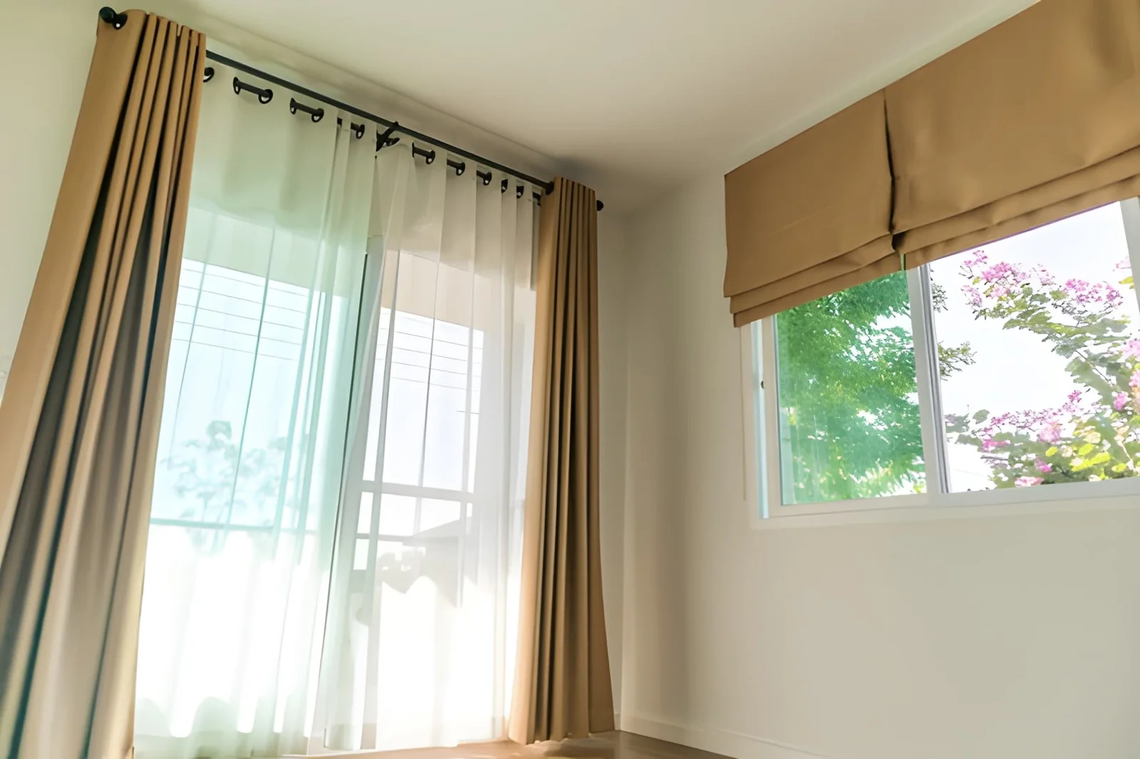
Identify the hours when people can see in, then use layers. Choose a sheer or light-filtering layer for daytime privacy with light, and a lined or blackout layer for evening. Adjustable options, such as top-down bottom-up shades or dual day-night shades, give both in one product.
Why Does Privacy Flip After Dark?
People see through glass toward the brighter side. During the day the outside is brighter, so sheer fabric hides the room. After dark the lit room is brighter, so the same sheer shows silhouettes and movement. Any treatment that relies only on daylight glare fails when you switch on the lamps.
Which Treatment Works at Which Hour?
| Treatment | Daytime Privacy | Evening Privacy | Light Control |
|---|---|---|---|
| Sheer curtains | Good | Poor | Soft, bright |
| Light-filtering shades | Good | Moderate, silhouettes remain | Medium |
| Lined or blackout curtains | Excellent | Excellent | Low light when closed |
| Top-down bottom-up shades | Excellent | Good | Light enters from the top |
| Dual day-night shades | Excellent | Excellent | Adjustable |
| Slat blinds | Good with angled slats | Good when closed | Adjustable |
| Frosted window film | Good | Good | Constant, no adjustment |
| Mirrored window film | Good | Poor, reverses at night | Reduces glare |
Frosted film blurs the view all day. Mirrored film mainly works in daylight, so it is a weak choice for rooms you use at night.
What Does a Day-Long Plan Look Like?
| Time | Who Can See In | Suggested Setting |
|---|---|---|
| Morning | Low risk, outside is brighter | Sheers closed, or open |
| Midday | Low risk | Light-filtering layer or open |
| Dusk | Risk rises as lamps come on | Close the second layer when you switch on lights |
| Night | High risk | Lined or blackout layer closed |
Close the evening layer at the same time you switch on the lights. That small habit does most of the work.
What Is the Outside-In Test?
Test your windows before you buy anything.
- Pick three times: midday, dusk, and night with lights on.
- Stand where passersby stand, such as the sidewalk or a neighbor’s window line.
- Ask someone inside to move around, or take photos from outside.
- Write down what you can see: shapes, faces, or the whole room.
- Fix the worst hour first, then add a second layer for the others.
- Choose cordless options if children or pets live in the home, because looped cords are a strangulation hazard.
Which Rooms Need Which Setup?
| Room | Main Risk | Good Fit |
|---|---|---|
| Street-level living room | Evening silhouettes | Dual shades or sheers plus lined curtains |
| Bedroom | Night and early morning light | Blackout lining |
| Bathroom | Constant need | Frosted film or moisture-safe shades |
| Home office | Glare and daytime visibility | Slat blinds or light-filtering shades |
Frequently Asked Questions
Are sheer curtains private at night?
No. Once indoor lights are on, sheers usually show silhouettes and movement.
Do I always need two layers?
Not always. Dual shades and top-down bottom-up shades combine both functions in one treatment.
Can window film replace curtains?
Frosted film gives steady privacy but no flexibility, and it blocks the view out as well.
Bottom Line
Privacy is a question of light, not just fabric. Find the hours when you are visible, then use a daytime layer and an evening layer, or an adjustable shade that does both. Run the outside-in test, fix the worst hour first, and make closing the second layer a habit when the lights go on.
Must visit https://decoratoradvice.ca/ for window treatment ideas.