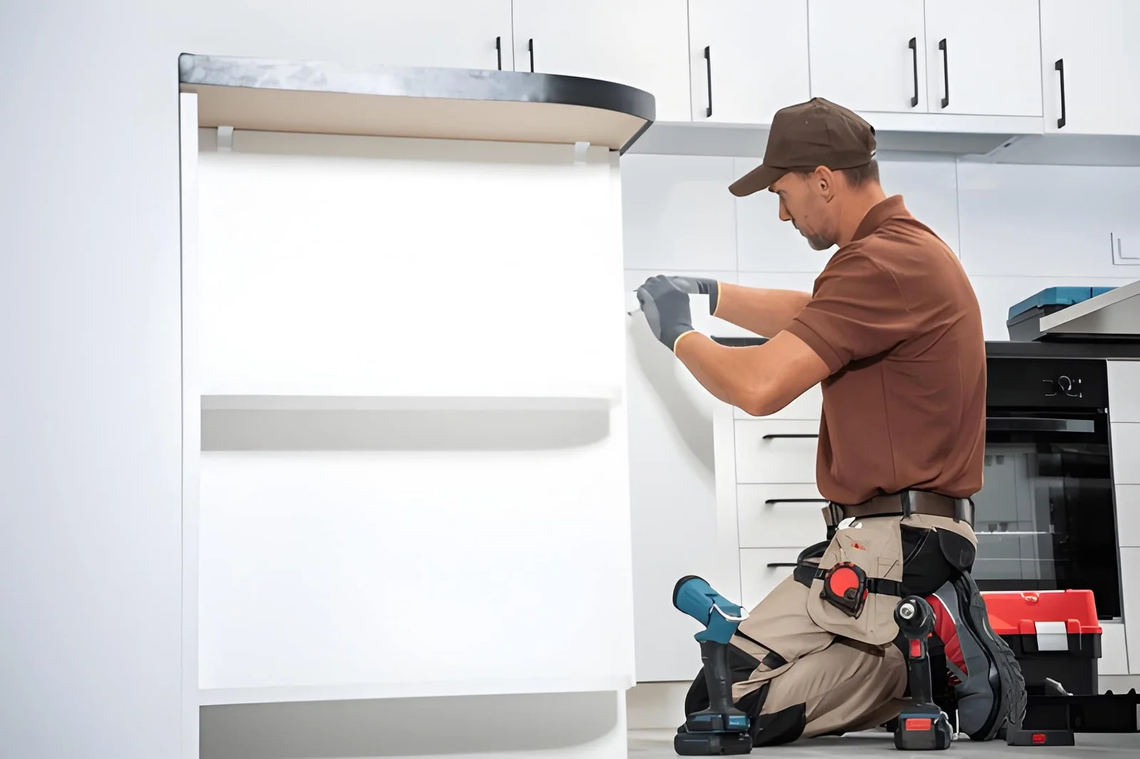
The floating cabinet looks perfect in the showroom photo. Then you hold it against your wall, and the bracket holes land halfway between two studs, the right edge hits a light switch, and the bottom sits exactly where the sofa arm needs to be. Wall-mounted furniture fails in the planning stage far more often than in the drilling stage. So what should you measure before installing wall-mounted furniture? Not just the wall’s width. You need to measure what is inside the wall, the space around it, and the load it will carry. This guide gives you six numbers to collect before you buy or drill. You will find a quick answer, a measurement table, a stud spacing check, a height table, a short pre-drilling routine, and a short FAQ. A tape measure, a pencil, and a stud finder with wire detection are enough.
What Should You Measure Before Installing Wall-Mounted Furniture?
Measure stud positions and spacing, hidden wires and pipes, mounting height, side and top clearance, the furniture’s bracket hole spacing, and the total load you will place on it. Compare each number with the furniture’s instructions before you drill. If any number does not match, change the position or the product.
What Are the Six Numbers?
| Number | What to Measure | Why It Matters |
|---|---|---|
| 1. Stud centers | Distance between framing members | Strongest anchor points |
| 2. Hidden utilities | Wires, pipes, and ducts behind the target area | Avoids dangerous or costly drilling |
| 3. Height | Floor to the bottom, top, or center of the piece | Comfort, safety, and use |
| 4. Clearance | Space to each side, above, and in front | Door swings, outlets, and walkways |
| 5. Bracket spacing | Distance between mounting points on the furniture | Must line up with studs |
| 6. Load | Furniture weight plus what it will hold | Determines hardware and anchors |
How Do You Check Stud Spacing?
The standard distance between wall studs is 16 inches, but studs may sit anywhere from 12 to 24 inches apart. If you do not find a stud at 16 inches, try 24, and in older homes the distance can vary. Scan with a stud finder, mark each stud, then measure the distance between centers. Confirm with a second pass, because false positives are common.
Most floating cabinet brackets do not line up perfectly with a 16 inch interval, so compare your furniture’s hole spacing with your stud marks before you buy. If the spacing does not cooperate, shift the piece a few inches instead of relying on drywall anchors. Some manufacturers specify wood studs only. One floating shelf maker states that its shelves must not be fastened into metal stud framing. Read your product instructions.
What About Pipes and Wires?
Check for light switches, outlets, and visible plumbing, since these suggest hidden lines nearby. Use a stud finder with live-wire detection, and avoid drilling near outlets, switches, kitchens, and bathrooms without checking. If you are unsure, hire an electrician or plumber.
What Height Should You Choose?
| Furniture | Common Starting Point | Check |
|---|---|---|
| TV cabinet | Match the TV’s center to your seated eye level | Sit on the sofa and measure |
| Floating shelves | Lowest shelf around 44 to 48 inches from the floor for easy reach | Stack shelves with room for objects |
| Kitchen shelves | Around 54 to 60 inches for display shelves | Match cabinet lines |
| Bathroom cabinets | About 48 to 52 inches | Keep clear of the sink and plumbing |
| Desk or console | Seat and knee clearance | Leave room for chairs |
| Entryway units | Above shoe or bag height | Check door swing |
These are starting points. Adjust for who uses the space, including children and people with limited reach.
How Do You Plan the Load?
Add the furniture’s weight and the heaviest items it will hold. Choose hardware rated above that total, and check the capacity of each fastener and the wall type. Drywall anchors are not designed to handle the leverage and weight of a furniture piece, according to one wall-mounted cabinet guide, so use studs for heavy units. If your wall is plaster, brick, or concrete, follow the manufacturer’s guidance for that surface.
What Should You Do Before Drilling?
- Mark stud centers with painter’s tape.
- Scan for wires and pipes, and mark them.
- Hold the furniture or a paper template against the wall to check clearances.
- Check the level with a spirit level.
- Confirm the screw length and rating in the instructions.
- Drill small pilot holes, and test the fit before tightening.
Frequently Asked Questions
Can I mount furniture without studs?
Only light items with anchors rated for the load. Heavy furniture should be fixed into studs or solid supports.
What if my stud spacing is unusual?
Shift the furniture, use a mounting rail, or ask a professional.
Should I hire a professional?
Yes, for heavy units, unclear walls, or anything near utilities.
Bottom Line
Measure the wall’s insides, the room around it, and the load before you pick up a drill. Match the furniture’s bracket holes to your stud marks, scan for wires and pipes, and choose hardware rated above the weight. A few minutes of measuring prevents holes you cannot undo.
Must visit https://decoratoradvice.ca/ for measuring ideas.