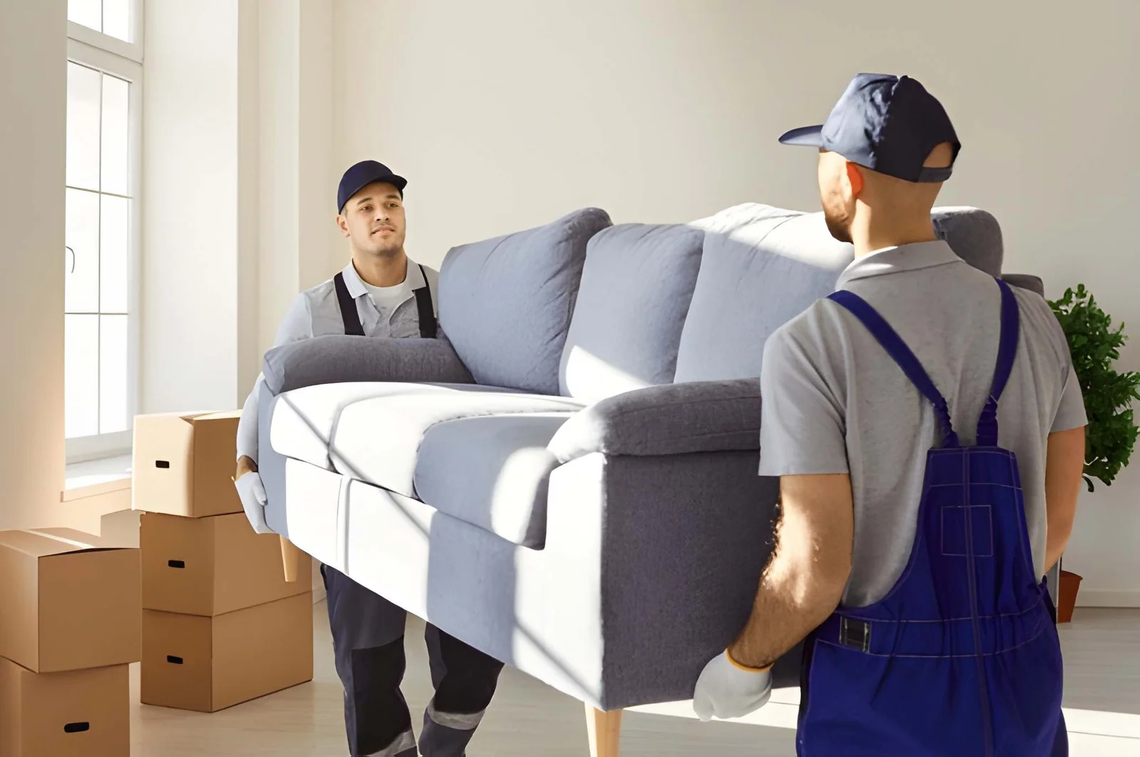
The delivery crew carries your new sofa up the path, turns it sideways at the front door, and stops. Nobody speaks. Then comes the sentence you were dreading: “It’s not going to fit.” Now you have a refused delivery, a restocking fee, and a living room with a gap where the sofa should be. Most of these failures are avoidable, because the room is rarely the problem. The route is. If you want to know how to prepare your home for a furniture delivery with narrow access, think like the crew: find the tightest points on the path, compare them with the item’s real dimensions, and clear everything else out of the way. This guide shows you how. You will find a quick answer, a measurement table, a pinch point check, a preparation checklist, a table of fixes for tight spots, and a short FAQ. A tape measure and a notepad are enough.
How Do You Prepare Your Home for a Furniture Delivery With Narrow Access?
Measure every point on the delivery route, from the vehicle to the room, and compare the narrowest and lowest points with the furniture’s width, depth, and height. Clear the path, protect surfaces, and tell the delivery company about any tight spots before the delivery date.
What Should You Measure?
| Measure | Where | Why |
|---|---|---|
| Door opening width | Front door, hallway doors, room door | Clear width is smaller than the door frame |
| Door opening height | Same doors | Tall pieces tilt through, but need height clearance |
| Hallway width | Narrowest stretch, including radiators and shelves | Turns are harder than straight runs |
| Stair width and headroom | Entire staircase, including the lowest ceiling | Low beams and sloped ceilings catch tall pieces |
| Corner or landing size | Every turn | Long items need turning space |
| Lift (elevator) size | Door and interior | Many lifts have narrower doors than cabins |
| Outside path | Gate, steps, driveway slope | Delivery vehicles may park far away |
Measure the clear opening with the door open at its widest, because hinges and handles take space. Write each number down and mark its location.
What Is the Pinch Point Check?
The pinch point is the single tightest spot on the route. It decides everything.
- Walk the route from the street to the final room.
- Measure the narrowest width and the lowest height at each section.
- Circle the smallest numbers on your notes. That is your pinch point.
- Compare it with the furniture’s smallest dimension. Add at least an inch or two of margin for hands and handling.
- Check the product page for a packaged size, which may be larger than the item itself.
- If you are close, make a cardboard template of the item’s cross section and slide it through the pinch point.
How Do You Fix a Tight Spot?
| Problem | Possible Fix |
|---|---|
| Door too narrow | Remove the door from its hinges to gain an inch or more |
| Tight stairwell | Remove banister caps or handrails if safe and permitted |
| Sharp turn | Check whether the item tilts or can be fitted in another orientation |
| Low ceiling or beam | Choose a piece with a lower height, or one that disassembles |
| Narrow lift | Ask the delivery company about stairs or hoisting |
| Large item, no route | Order a modular or flat-pack alternative |
| Outside obstacles | Move bins, planters, or parked cars |
Only remove fittings you are able to reinstall. Do not alter structural parts.
What Should You Do Before Delivery Day?
- Tell the company about tight spots, stairs, lifts, and parking when you book.
- Ask if they offer room-of-choice delivery, assembly, or unpacking.
- Clear the route of shoes, rugs, plants, and fragile items.
- Lift or tape rugs flat to prevent trips.
- Protect floors and door frames with cardboard or blankets.
- Reserve any lift or parking space in advance if your building requires it.
- Plan the final position in the room so the crew does not have to shuffle the piece.
Frequently Asked Questions
What if the furniture does not fit?
Check the company’s policy. Some will return it, others charge a fee, and some will offer hoisting.
Should I measure with the door open?
Yes. Measure the widest clear opening with the door fully open.
Is it better to buy flat-pack for tight homes?
Often. Flat-pack and modular pieces travel in smaller boxes, but assembly takes time.
Bottom Line
A narrow access delivery succeeds when you plan around the tightest spot, not the largest room. Measure the route, find the pinch point, fix what you can, and warn the delivery company in advance. Ten minutes of measuring costs far less than a refused sofa.
Must visit https://decoratoradvice.ca/ for narrow access delivery ideas.