Comfort is relative in the way that most things we’ve lived with long enough become relative. You stop noticing the sofa that’s slightly too firm because you’ve adapted to it. You stop seeing the lamp that’s in the wrong position because you’ve been working around it for three years. You’ve stopped expecting your living room to feel great because it’s been feeling adequate for so long that adequate has come to feel normal.
This is settling — and it’s so gradual and so complete that most US homeowners can’t distinguish it from genuine comfort until they sit in someone else’s living room that actually works and feel the difference immediately.
The distinction between a living room you’re comfortable in and one you’ve learned to settle in is important because the fixes are entirely different. Settling usually comes from specific, correctable problems — furniture that doesn’t fit the body correctly, a layout that creates friction rather than ease, lighting that never shifts to match the evening, a room that looks designed but doesn’t function for how you actually use it. None of these require starting over. They require honest diagnosis and targeted correction.
This article covers exactly how to tell which situation you’re in — and what specifically to change.
How to Tell If You’re Settling in Your Living Room
The behavioral signals of settling are consistent across US households. They’re worth naming explicitly because most homeowners have normalized them to the point where they’ve stopped recognizing them as signals.
| Behavioral Signal | What It Actually Means | What It Points To |
|---|---|---|
| You sit somewhere other than the main sofa when possible | The sofa is less comfortable than the alternative | Wrong sofa depth, firmness, or position |
| You always watch TV from the same corner | Other positions in the room don’t work visually | Furniture layout or TV position problem |
| Guests consistently end up in the kitchen | Living room isn’t actually comfortable for social use | Layout, seating arrangement, or acoustic issue |
| You add blankets or pillows every time you sit down | The seating isn’t comfortable without modification | Wrong cushion fill, seat height, or temperature |
| You rarely use the room in the evening | Lighting makes it feel uninviting after dark | No layered lighting, too bright, too cool |
| You think of decorating the room more than using it | The room is performing aesthetically but not functionally | Style-first design without comfort-first function |
If three or more of these describe your living room, you’re settling — and the fixes are more specific and more achievable than a full redesign.
The Most Common Living Room Comfort Problems and Their Fixes
The Sofa Problem
The sofa is the most used piece of furniture in most US living rooms and the one where settling is most common — because sofa purchasing decisions are made standing in showrooms, not sitting for extended periods, and the two experiences are completely different.
A sofa that seems comfortable in the store may have the wrong seat depth for your specific body — too shallow so the edge cuts into the back of the knees, or too deep so the back support becomes unreachable without losing the front edge. It may have cushion fill that feels fine at first contact and bottoms out within thirty minutes of sustained sitting. It may look proportionally correct in the room while being the wrong height for comfortable seated position.
The honest test: sit on your sofa for forty-five minutes reading or watching television. If you’ve shifted positions multiple times, added cushions for back support, or avoided sitting upright, the sofa isn’t comfortable — you’ve been managing it.
| Sofa Comfort Problem | How to Identify It | Fix Without Replacing Sofa | When to Replace |
|---|---|---|---|
| Seat too shallow | Knees extend past sofa edge | Add lumbar cushion to push body forward | When seat is under 18″ deep |
| Cushions bottomed out | Sitting on frame after 30 minutes | Replace cushion inserts ($40–$120) | When frame structure also compromised |
| Wrong seat height | Feet don’t rest flat on floor | Add rug or footrest at correct height | When height difference is more than 3 inches |
| Back support gap | Must lean forward to feel back support | Add lumbar pillow at lower back | When back profile is structurally wrong |
| Cushion too firm | Pressure points after 20 minutes | Add soft topper layer to cushion | When fill is dense foam with no give |
The Layout Problem
Most living room layouts are made once — at move-in, when the primary goal is getting everything in without blocking doors — and never reconsidered regardless of whether they serve how the household actually uses the space.
A layout problem in a living room produces specific symptoms: seating that faces a direction where the primary activity doesn’t happen, distances between seats that are too large for comfortable conversation, traffic paths that run through the seating group rather than around it, or a television position that requires awkward neck angles from the most used seating position.
The conversation distance issue is worth specific attention. Research on human social comfort consistently finds that face-to-face conversation at distances of 7 feet or more creates subconscious effort — the brain is working harder to process communication at that distance than at 4 to 6 feet. A living room where facing sofas are 9 feet apart isn’t comfortable for conversation. It’s a layout that makes you feel like you’re talking across a room rather than to each other.
| Layout Problem | Diagnostic Test | Fix |
|---|---|---|
| Seating too far apart | Measure face-to-face distance — over 7 feet | Float seating inward, reduce the gap |
| Traffic cuts through seating group | People walk through conversation zone | Reroute pathway around the group |
| TV at wrong angle | Neck turns more than 15° to see TV from primary seat | Reposition TV or primary seating |
| No clear focal point | Eye doesn’t know where to go when entering | Establish one visual anchor the layout responds to |
| Every seat against a wall | Room feels like a waiting area | Float primary seating away from walls |
| Mixed-height seating | One person always looking up or down | Standardize seat heights within 2 inches |
The Lighting-Comfort Problem
A living room that feels comfortable during the day and uncomfortable in the evening has a lighting problem — specifically, the transition from natural to artificial light hasn’t been designed to support the shift in how the room is used.
Daytime living room use is often task-adjacent: reading, working remotely, managing household business. This requires adequate light. Evening living room use is primarily social or restorative: conversation, entertainment, winding down. This requires warm, dim, layered light. A living room with only fixed overhead lighting serves one mode — the one that doesn’t happen in the evening — and consistently makes evening use less comfortable than it should be.
The connection between comfort and lighting isn’t primarily aesthetic. Bright overhead light maintains a physiologically alert state that makes settling in for an evening difficult. The body reads the environmental signal as “still daytime” regardless of what the clock says. Adding a floor lamp, dimming the overhead, and warming the bulb temperature allows the room to shift modes in the way the household’s actual evening needs require.
What Genuine Living Room Comfort Actually Feels Like
This is worth naming explicitly because many US homeowners have been settling long enough that they’ve lost the reference point for comparison.
A genuinely comfortable living room is one where:
You sit down and don’t think about sitting. The seating position is immediately supported enough that your attention goes to what you’re doing rather than to managing your body’s position in the seat.
The room’s light feels appropriate to the time of day without you having to adjust anything. In the morning it’s bright and clear. In the evening it’s warm and dim without any conscious effort.
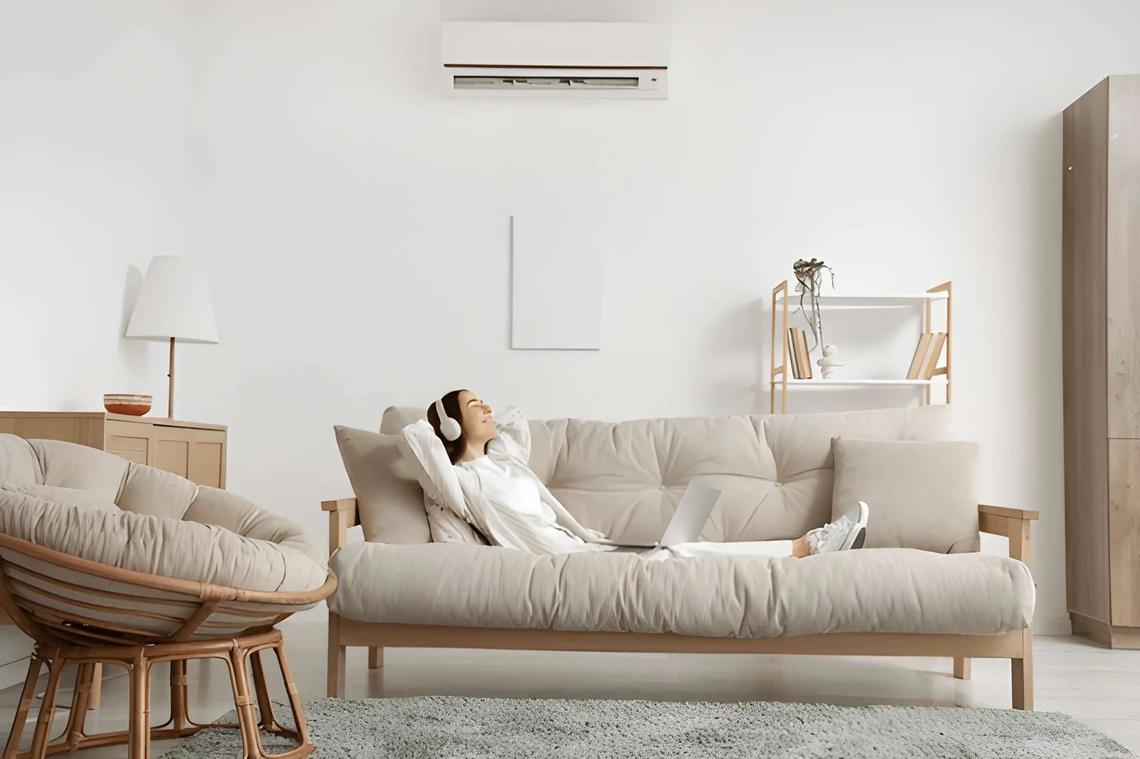
You stay longer than you planned to. Comfortable spaces extend time — you sit down for twenty minutes and find an hour has passed. Uncomfortable ones shorten it — you finish your task and leave rather than linger.
Guests stay in the room rather than migrating elsewhere. A living room that actually works for social use keeps people in it. One that doesn’t work disperses them to wherever is more comfortable.
| Comfort Indicator | Settling Indicator |
|---|---|
| Sit down without adjusting position | Immediately add a pillow or adjust posture |
| Stay past intended duration | Leave when the specific task is done |
| Guests linger in the room | Guests migrate to kitchen or elsewhere |
| Evening lighting feels right without adjustment | Evening lighting too bright or too cool |
| Conversation flows easily | Conversation feels effortful across the room |
| Room used daily without thinking about it | Room used for specific purposes, avoided otherwise |
Frequently Asked Questions
How do I know if I’m comfortable or settling in my living room?
The most reliable test is behavioral rather than evaluative. Track where you actually sit versus where you’re supposed to sit, notice whether guests migrate to other rooms, and pay attention to how long you stay in the space voluntarily. A living room you’re genuinely comfortable in gets used more than you consciously decide to use it. One you’re settling in gets used when necessary and abandoned when possible.
Can I fix living room comfort without replacing furniture?
Often yes. Cushion inserts can be replaced for $40 to $120, which fixes the most common sofa comfort problem. Furniture can be repositioned for free. Lighting can be transformed for under $100 with bulb changes, a floor lamp, and a dimmer switch. The expensive fix (replacing the sofa) is actually rarely the first-indicated fix. Start with the repositioning and lighting changes before concluding that new furniture is required.
What’s the most common reason US living rooms aren’t actually comfortable?
Layout — specifically, seating arranged against walls with too much distance between pieces, facing a television that’s the room’s only focal point. This arrangement creates a passive, single-purpose living room that’s comfortable only for watching screens and uncomfortable for everything else: conversation, reading, relaxing without a specific task. Floating furniture inward and reducing the distance between seating pieces consistently produces the most improvement per zero dollars spent.
Why do I feel more comfortable on the floor than on my sofa?
Because the floor provides firm, full-body support that the sofa doesn’t. This specifically indicates a sofa comfort problem: the cushions aren’t providing adequate support, the seat height creates tension in the hips, or the back support isn’t making contact where it should. Floor sitting is comfortable because gravity and a hard surface solve the support problem your sofa isn’t solving. The fix is improving the sofa’s support characteristics rather than accepting the floor as the living room’s most comfortable seat.
Is it worth replacing a living room sofa for comfort?
When the sofa’s structural problems can’t be addressed with cushion replacement or supplemental support, yes — and for a piece you use daily for potentially a decade, the calculation is more favorable than it appears. The more important prior question is whether the sofa’s problem is structural (the frame, the depth, the height) or material (the fill, the cushions). Material problems are fixable without replacement. Structural ones aren’t.
The Bottom Line
Settling in a living room is so gradual and so complete that it stops feeling like settling — it starts feeling like what your living room is, rather than what it’s become through accumulated adaptation. The test isn’t whether the room looks good. It’s whether you’d choose to be in it if you had an equal alternative.
Most living room comfort problems are specific and correctable without replacing everything: the sofa cushions that can be refilled, the layout that can be repositioned, the lighting that can be warmed and layered, the conversation distance that can be closed. Address those specifically and in order, and the living room you’ve been settling in has a reasonable chance of becoming the living room you actually want to be in.
For comfortable living room ideas must visit https://decoratoradvice.ca/