
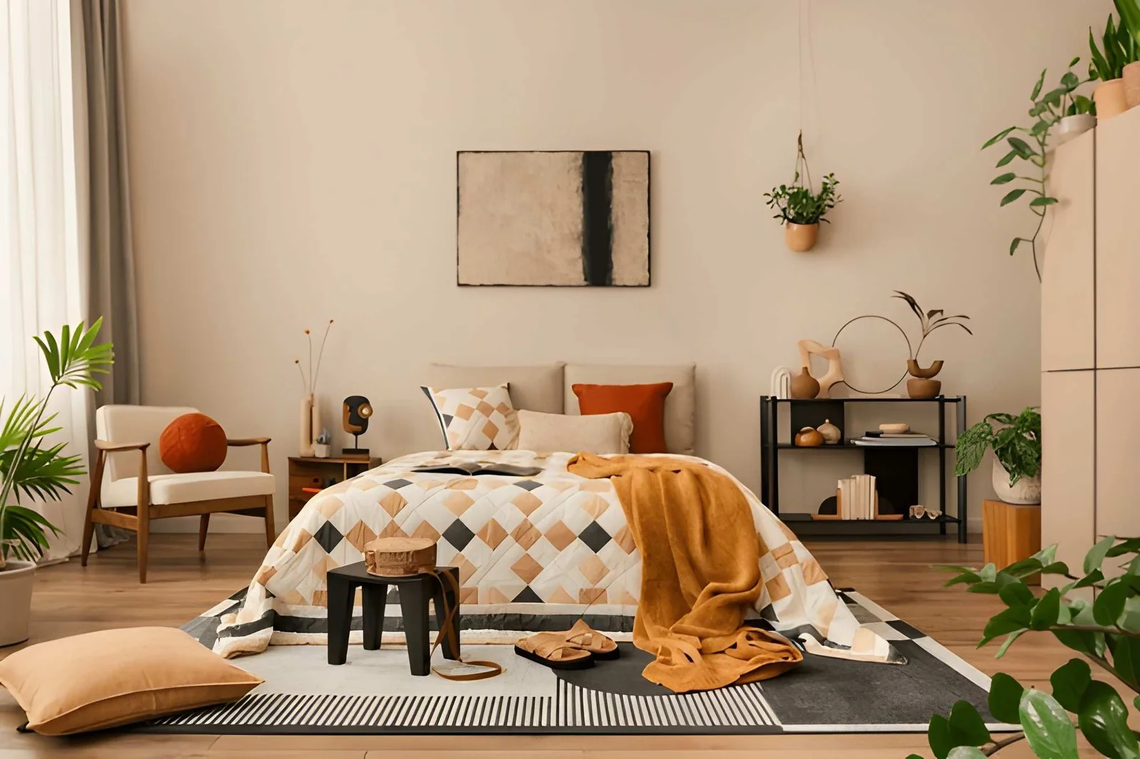
Most people spend more time in their bedroom than any other room in the house — and most bedrooms are decorated like an afterthought. A mattress, a nightstand, whatever curtains came with the apartment. The result is a room that functions but doesn’t restore. You sleep in it, but you don’t actually recover in it.
Decorating your bedroom for better comfort isn’t about following a style trend or spending a lot of money. It’s about understanding what the brain and body need from a sleep environment and making deliberate choices that support those needs. Light temperature, textile weight, color psychology, noise management, furniture placement — these aren’t just aesthetic decisions. They directly affect sleep quality, stress levels, and how rested you feel when you wake up.
This guide covers the best ways to decorate your bedroom for better comfort: what to change first, what most decorating advice gets wrong, and how to build a room that actually earns the word “sanctuary” rather than just calling itself one. No major renovation required.
Why Most Bedrooms Fall Short on Comfort
The gap between a functional bedroom and a genuinely comfortable one usually comes down to a few specific oversights — most of which are easy to fix once you know what to look for.
| Common Oversight | How It Hurts Comfort | Fix |
|---|---|---|
| Cool or bright lighting | Suppresses melatonin, delays sleep | Warm bulbs (2700K), dimmers |
| Synthetic bedding | Traps heat, disrupts sleep temperature | Natural fibers: cotton, linen, wool |
| No window treatment | Light intrusion disrupts sleep cycles | Blackout or heavy lined curtains |
| Too much visual clutter | Keeps brain in alert mode | Edited surfaces, hidden storage |
| Wrong mattress firmness | Physical discomfort interrupts deep sleep | Match firmness to sleep position |
| Electronic devices visible | Blue light and psychological stimulation | Remove or cover all screens |
Best Ways to Decorate Your Bedroom for Better Comfort
1. Start With the Lighting
Bedroom lighting is where most comfort problems begin and where the easiest wins are. Overhead fixtures with bright, cool-white bulbs are fine for kitchens and offices. In a bedroom, they actively work against rest by suppressing melatonin production — the hormone that signals your body to sleep.
Replace any cool-white bulbs with warm-toned ones in the 2700K range. Add bedside lamps so you’re not relying on overhead light at night. Install a dimmer if possible — the ability to lower light gradually as bedtime approaches helps the body shift into sleep mode naturally. Candles on a safe surface add another layer of warmth that no lamp fully replicates.
2. Invest in Bedding Before Anything Else
The bed is the room’s entire purpose. Everything else is secondary. Yet most people spend more on bedroom furniture they barely use than on the bedding they’re in contact with for seven or eight hours a night.
Natural fiber bedding — cotton percale, linen, or wool — regulates temperature better than synthetic alternatives. It breathes. It softens with washing rather than pilling. A weighted blanket (typically 10% of body weight) has consistent research support for reducing anxiety and improving sleep onset. Pillow count matters less than pillow quality and the right loft for your sleep position.
3. Choose Colors That Lower Stimulation
Color psychology in bedrooms is real, even if it gets overstated. The colors that consistently support rest are muted, low-saturation, and warm-leaning: dusty blues, warm greiges, soft sage, deep taupe, and warm whites. These aren’t just aesthetically calm — they reduce visual stimulation in a way that brighter, more saturated colors don’t.
Avoid highly saturated colors on large surfaces — an accent wall in deep teal can work, but a fully red or bright yellow bedroom keeps the brain more alert than most people realize. If repainting isn’t an option, shift the dominant color through bedding, curtains, and soft furnishings instead.
4. Control Light Intrusion
Natural light is essential during the day and disruptive at night. Street lights, early sunrise, and passing car headlights all interrupt sleep cycles in ways people often attribute to other causes.
Blackout curtains or heavily lined drapes are one of the highest-impact comfort investments available for any bedroom. They don’t need to be heavy or bulky in appearance — many modern blackout options are lightweight and tailored. Layering sheers underneath gives you flexibility: full light during the day, complete darkness at night.
5. Reduce Visual Noise
A cluttered bedroom keeps the brain subtly activated. Even when you’re not consciously registering the pile of clothes on the chair or the stack of books on the floor, your nervous system is. The bedroom should have less visual information than any other room in the home — not because minimalism is a trend, but because the brain needs low stimulation to fully relax.
Edit surfaces down to what’s functional and meaningful. A nightstand needs a lamp, something to drink, and whatever you’re reading — not ten objects competing for space. The right bedroom storage approach keeps everything accessible without keeping it visible.
6. Get the Temperature and Airflow Right
Decoration affects thermal comfort more than most people account for. Rugs on hard floors make rooms feel warmer and reduce the physical shock of cold floors in the morning. Heavy textiles — curtains, upholstered headboards, thick rugs — absorb sound and reduce the echoey quality that makes rooms feel harsh. A ceiling fan on low keeps air moving without cooling the room too aggressively.
The ideal sleep temperature for most adults sits between 65 and 68°F. Decorating decisions that support that range — breathable bedding, appropriate window coverage, airflow management — directly translate to better sleep quality.
Bedroom Comfort Priority Guide
| Change | Comfort Impact | Estimated Cost |
|---|---|---|
| Warm-toned bulbs + dimmer | Very High | Low |
| Natural fiber bedding | Very High | Medium |
| Blackout curtains | High | Low to Medium |
| Weighted blanket | High | Medium |
| Surface declutter | High | Free |
| Rug on hard floor | Medium-High | Low to Medium |
| Upholstered headboard | Medium | Medium to High |
| Remove/cover electronics | Medium | Free |
FAQ
What colors are best for a comfortable bedroom?
Muted, warm-toned colors consistently support rest: soft sage, dusty blue, warm greige, deep taupe, and warm white. Avoid highly saturated colors on large surfaces — they keep the brain more alert.
Does bedroom décor actually affect sleep quality?
Yes, directly. Lighting temperature affects melatonin production. Bedding material affects sleep temperature regulation. Color saturation affects visual stimulation. Clutter affects background stress. These aren’t minor variables — they compound across every night’s sleep.
What’s the single most impactful bedroom comfort change?
Lighting, almost universally. Switching to warm-toned bulbs and adding bedside lamps costs little and immediately changes how the room feels at night. Blackout curtains are a close second.
How do I make my bedroom feel more luxurious without spending a lot?
Focus on what touches your body first — better pillowcases, a quality duvet insert, softer sheets. These are felt before anything is seen. Then clear your surfaces and add one warm light source. The effect is immediate and doesn’t require significant spending.
Should a bedroom have a TV?
From a comfort and sleep quality standpoint, no. Screens introduce blue light and psychological stimulation that work against the room’s core function. If removing it isn’t realistic, covering it when not in use reduces the ambient stimulation it creates.
Bottom Line
The best ways to decorate your bedroom for better comfort all point in the same direction: reduce stimulation, support sleep, and make the room work for your body rather than just your eyes. Warm lighting, natural bedding, blackout curtains, a calm color palette, and edited surfaces aren’t luxury additions — they’re the baseline a genuinely comfortable bedroom needs.
Start with the lighting and the bedding. Those two changes touch every single night you spend in the room. Build from there. A bedroom decorated for real comfort doesn’t need to look like a hotel — it needs to feel better than one.
Must visit https://decoratoradvice.ca/ for comfortable bedroom decoration.