You’ve experienced it — walking into a room and feeling something shift immediately. The space catches you before you’ve consciously registered what’s in it. You slow down. You look. Something about this particular environment is different from the thousands of rooms you’ve passed through and forgotten, and whatever that quality is, it registered in the first two seconds before your analytical mind had a chance to evaluate individual elements.
This isn’t random. The spaces that catch attention — that produce an immediate, visceral response before anyone has named what they like about them — are doing specific things that ordinary spaces don’t. They’re manipulating visual hierarchy, sensory contrast, scale relationships, and emotional cues in ways that engage the brain’s attention systems before conscious processing begins.
Understanding why certain spaces produce this effect is valuable for US homeowners not as academic exercise but as practical guidance. The principles behind attention-capturing spaces are learnable and applicable — they explain why some rooms feel designed and others feel furnished, why some spaces feel memorable and others forgettable, and what specifically needs to change to move a room from the second category to the first. This article covers the mechanisms precisely and translates them directly into design decisions.
The Neuroscience of Why Certain Spaces Capture Attention
The brain processes visual environments through two systems operating simultaneously. The first is rapid and involuntary — detecting contrast, novelty, scale, and threat before conscious awareness. The second is slower and deliberate — evaluating what was detected and forming preferences.
Spaces that catch attention are captured by the first system before the second has engaged. This is why the response feels immediate and often emotional rather than analytical — “this space is incredible” rather than “this space has good proportions and interesting material choices.”
Research by neuroscientist Oshin Vartanian at the University of Toronto found that spaces rated as beautiful activated the anterior cingulate cortex and motor areas associated with approach behavior — the brain’s “I want to go there” response. Spaces rated as ugly activated withdrawal responses. The difference wasn’t learned aesthetic preference — it was neurological approach versus avoidance, triggered by specific environmental characteristics.
| Environmental Characteristic | Attention-Capturing Effect | Neurological Mechanism |
|---|---|---|
| High contrast element against neutral background | Eye pulled to contrast immediately | Contrast detection is pre-conscious |
| Unexpected scale (very large or very small) | Scale anomaly triggers attention | Novelty detection system |
| Visual complexity with hidden order | Sustained engagement — complexity rewards exploration | Reward system activated |
| Natural elements (light, plants, water, stone) | Calming attention — sustained positive engagement | Biophilic neural response |
| Clear focal point with supporting elements | Ordered visual hierarchy — brain comfortable | Gestalt completion satisfaction |
| Darkness with selective light | Mystery — draws toward illuminated areas | Threat/curiosity combined response |
The Specific Design Qualities That Make Spaces Attention-Capturing
The Focal Point Principle: Giving Attention a Destination
The most fundamental characteristic of attention-capturing spaces is a clear, immediate focal point — one element so visually dominant that the eye goes to it first, every time, from every position in the room. Without this, the eye has nowhere to go and the brain registers the space as unresolved.
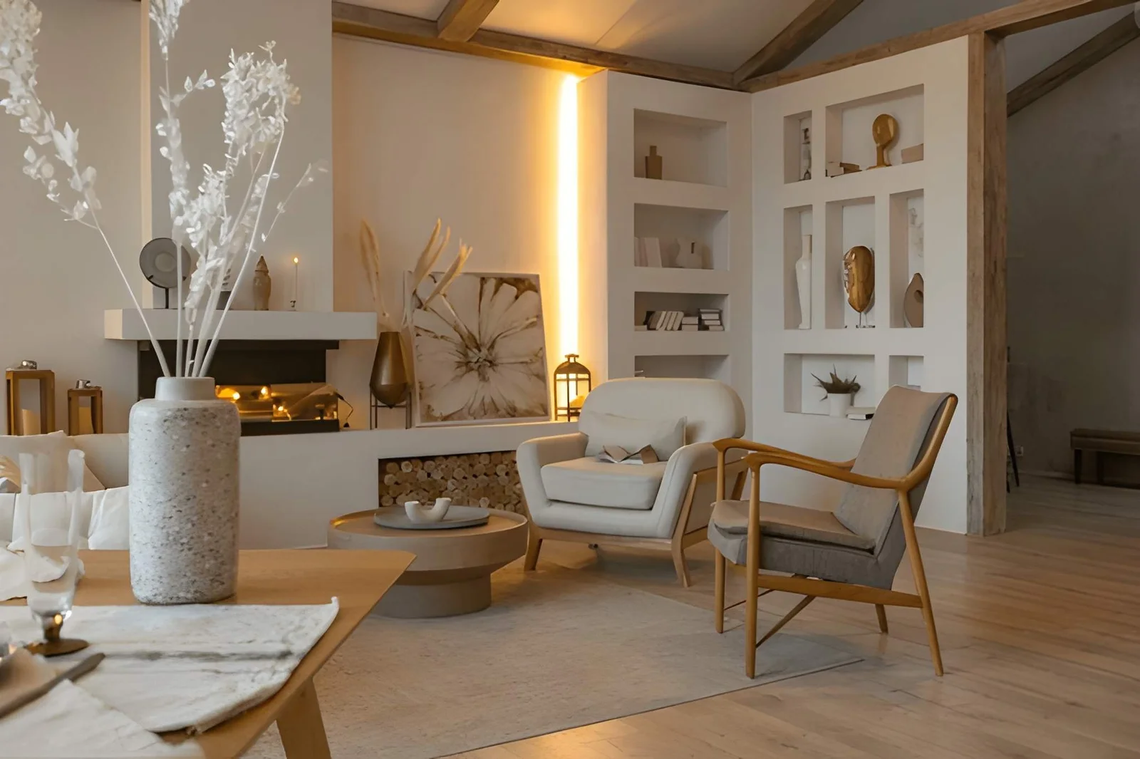
In well-designed spaces, this focal point is established deliberately and everything else supports rather than competes with it. A large-scale piece of artwork above the primary seating. A fireplace with a considered surround and carefully styled mantel. A statement light fixture positioned at the visual center. A view framed by a significant window. Each of these creates the visual anchor that makes a space feel organized and intentional rather than assembled.
The supporting elements’ job is to acknowledge the focal point — through color relationship, scale proportion, or directional orientation — rather than create alternative focal points that compete for the eye’s first movement.
| Focal Point Type | Why It Commands Attention | Best Room Application |
|---|---|---|
| Large-scale artwork | Size commands scale hierarchy | Living room, dining room |
| Fireplace with styled surround | Architectural permanence, historical cue | Living room, bedroom |
| Statement light fixture | Overhead position — always visible | Dining room, entryway, hallway |
| View through significant window | Natural scene changes continuously | Any room with quality exterior view |
| Architectural feature (arch, niche, vault) | Structural — reads as permanent intention | Any primary room |
| Dramatic plant at scale | Organic life at unexpected size | Living room, entryway |
The Contrast Principle: Creating Visual Tension That Demands Resolution
Attention-capturing spaces almost universally contain deliberate contrast — not the decorative contrast of mismatched patterns but the structural contrast of unexpected pairings that create visual tension the brain wants to resolve.
Old and new paired deliberately. Rough and refined surfaces adjacent to each other. A large dark element against a light environment. Something intimate in a grand space. Something grand in an intimate one. These contrasts trigger the brain’s pattern-completion instinct — the desire to understand the relationship between elements that don’t immediately explain themselves together.
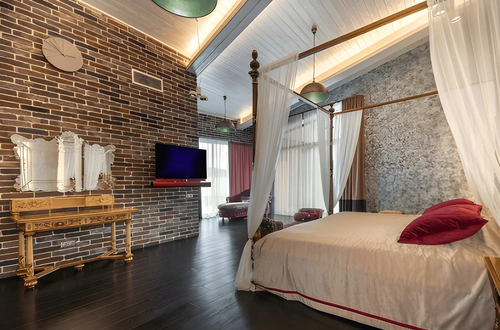
The spaces that feel most memorable are usually spaces where at least one contrast pairing creates this productive tension. A salvaged wood beam in a sleek contemporary interior. A single antique piece among modern furniture. A rough stone wall in an otherwise refined setting.
The Mystery Principle: Spaces That Reward Exploration
Attention-capturing spaces rarely reveal everything immediately. Environmental psychologists Kaplan and Kaplan identified “mystery” — the promise that moving through a space will reveal more information — as one of the most consistent predictors of positive space preference.
Spaces that capture attention often create mystery through partial reveals: a view into an adjacent space that’s partially obscured, a light source whose origin isn’t immediately obvious, a space that changes character as you move through it, an object that requires approach to fully understand.
This is why spaces with visible depth — rooms where sightlines extend into other areas, or where elements at different distances from the viewer create a layered visual field — consistently feel more interesting than flat, immediately comprehensible spaces of the same size.
How These Principles Appear in Spaces That Command Immediate Attention
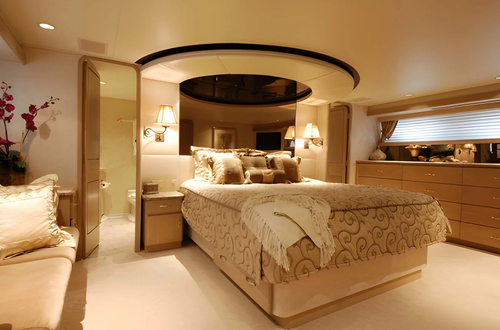
The spaces that consistently capture attention in the US design context — the rooms that stop people mid-scroll, that make guests slow down at the threshold — are almost always doing several of these things simultaneously:
| What the Space Is Doing | How It Appears | Effect on Attention |
|---|---|---|
| Strong focal point | One dominant element from entry | Eye has direction immediately — room feels organized |
| Deliberate contrast | Old/new, rough/refined, light/dark pairing | Brain tries to resolve tension — sustained engagement |
| Mystery element | Partial view, unexpected light source | Curiosity response — desire to explore |
| Human scale confirmation | At least one element sized to human body | Brain registers space as appropriate for inhabitation |
| Natural element | Plant, stone, wood, natural light | Biophilic response — sustained positive attention |
| Sensory specificity | Smell, texture, acoustic quality | Multi-sensory engagement beyond visual |
How to Apply These Principles to Your Own Spaces
The gap between spaces that capture attention and spaces that don’t isn’t primarily about budget, size, or professional help. It’s about the deliberate application of principles that most attention-capturing spaces share.
Start with a focal point assignment. Every room should have one element designated as the primary focal point before any other design decision is made. If the room currently has multiple competing elements or no clear primary element, establishing or strengthening one produces immediate improvement.
Introduce one deliberate contrast. Choose one pairing of materials, periods, or scales that creates productive tension — and allow it to be as unexpected as you’re willing to commit to. The contrast that makes you slightly uncomfortable in consideration is usually the contrast that makes the space remarkable in execution.
Create one mystery element. Lighting whose source isn’t immediately obvious. A partial view into an adjacent space. An object that requires closer approach to fully appreciate. Spaces that give away everything immediately are remembered less than those that reward continued attention.
Frequently Asked Questions
Why do certain spaces immediately feel special while others feel ordinary?
Because attention-capturing spaces are doing specific things to the brain’s visual and emotional processing systems simultaneously: providing a clear focal destination for the eye, creating contrast that produces productive tension, offering mystery that rewards exploration, and confirming human scale through at least one intimately sized element. Ordinary spaces fail at one or more of these — usually the focal point, which is the most foundational.
Can any space be made more attention-capturing, or is it only possible in certain types of rooms?
Any space can be made more attention-capturing through these principles — the scale and method of application vary but the principles don’t. A small bathroom with one unexpected material choice and carefully placed lighting captures attention as reliably as a grand living room with architectural features. The principles scale down as effectively as they scale up.
What’s the single most impactful change to make a space more attention-capturing?
Establishing or strengthening the focal point. Most US residential spaces either lack a clear focal point or have multiple elements competing for primary visual attention simultaneously. Identifying one element to dominate and ensuring everything else supports rather than competes with it produces the most consistent and significant improvement in how immediately a space registers.
Why do spaces with natural elements seem to capture attention more consistently?
Because the human brain evolved in natural environments and responds to natural elements — plants, stone, wood, natural light, water — with a sustained positive attention response that manufactured materials don’t consistently trigger. This is the biophilic response documented extensively in environmental psychology research. Natural elements in interior spaces produce a specific neurological response that makes the space feel immediately more engaging and more pleasant to be in.
How does lighting specifically contribute to making spaces attention-capturing?
Through contrast and mystery simultaneously. A space with dramatic, directional lighting — where some areas are brilliantly lit and others recede into shadow — captures attention through contrast (bright against dark) and mystery (the shadowed areas invite approach to discover what’s there). The spaces most consistently described as “atmospheric” or “dramatic” by visitors are almost always spaces where lighting is creating these contrasts deliberately rather than illuminating everything evenly.
The Bottom Line
Certain spaces catch your attention because they’re doing specific, learnable things to your brain’s pre-conscious processing systems — establishing a focal destination for the eye, creating productive visual tension through contrast, rewarding sustained attention through mystery, and confirming the space is appropriate for human inhabitation through scale relationships.
These principles aren’t the exclusive domain of professional designers or architecturally significant buildings. They apply to any room in any US home — from a bedroom that needs one clear focal point to an entryway that needs one unexpected material contrast to a living room that needs lighting that creates mystery rather than uniformity.
The spaces that stop you belong in the category you can create. You just need to know what they’re doing.
Must visit https://decoratoradvice.ca/ for spaces ideas that catch attention.