I recently spoke with a woman who spent three long winters trying to make her drafty living room comfortable. It turned out her old windows were the culprit and she had been throwing good money after bad by buying thermal curtains, and then rolling up towels to place at the sills to try and block the air. She even pulled the sofa six inches from the wall in a futile attempt to read in comfort. It wasn’t until she received her January energy bill for $400 that she realized she needed to call someone to come and fix her windows. And yes, they were the original 1987 install and had been slowly failing over the years, but no dramatically or all at once, like a slow leak in a ceiling, you don’t notice the damage until it collapses. Her thermal curtains had only masked the problem and her new windows have transformed the room into a cozy retreat.
Windows can deteriorate slowly over the years before they cause noticeable problems in a home. Many people are not aware of the slow deterioration that occurs with windows as they age, and the increased costs for heating and cooling that can occur as a result.
The signs that actually matter
It’s common for homeowners to think they have leaky windows because of a draft. Most people assume that all they need to do is repair the leaks in their windows in order to stop the air from leaking out. The reality is that windows can deteriorate over time, and the decline of a window is gradual. By the time you feel a draft, the window could already be past the point of repair and need to be replaced.
- Condensation between the panes on double or triple-glazed windows. That fog isn’t cosmetic. It means the seal has failed and the insulating gas has escaped.
- Frames that are soft, warped, or visibly rotting, especially on wood windows that have had repeated moisture exposure.
- Windows that won’t stay open without a prop, or won’t close fully. A window that doesn’t latch isn’t just annoying. It’s a security problem.
- Noticeable temperature differences near the glass in winter or summer, even with the window shut. Run your hand along the frame. Cold radiating through is a red flag.
- Your heating or cooling bills have crept up year over year with no other explanation.
Some issues may require fixing of one or two items, but all of the listed issues point to a serious problem that requires the replacement of the windows.
Repair or replace? Here’s where it gets genuinely complicated
The frame of a window can fail. In many cases this can be repaired; but in many cases the cost of the repair is so close to the cost of the entire window replacement with decoratoradvice that it would be better to replace the windows. You are paying for a few years of extra life for your windows, but in the end you have achieved little.
A rough comparison that might help:
| Situation | Repair likely enough? | Notes |
| Single cracked pane | Yes | Straightforward if frame is intact |
| Failed IGU seal (foggy glass) | Sometimes | Sash replacement may be cheaper than full window |
| Rotted wood frame | Rarely | Structural issue; repair is usually a short-term patch |
| Windows 20+ years old, multiple issues | No | Diminishing returns on repair costs |
| Operational failure (won’t open/close) | Depends | Hardware sometimes fixable, frame warping usually not |
Window replacements are often done on homes that were built out all at once. In these cases, all of the windows are roughly the same age and are likely to fail around the same time.
What actually happens when you replace them
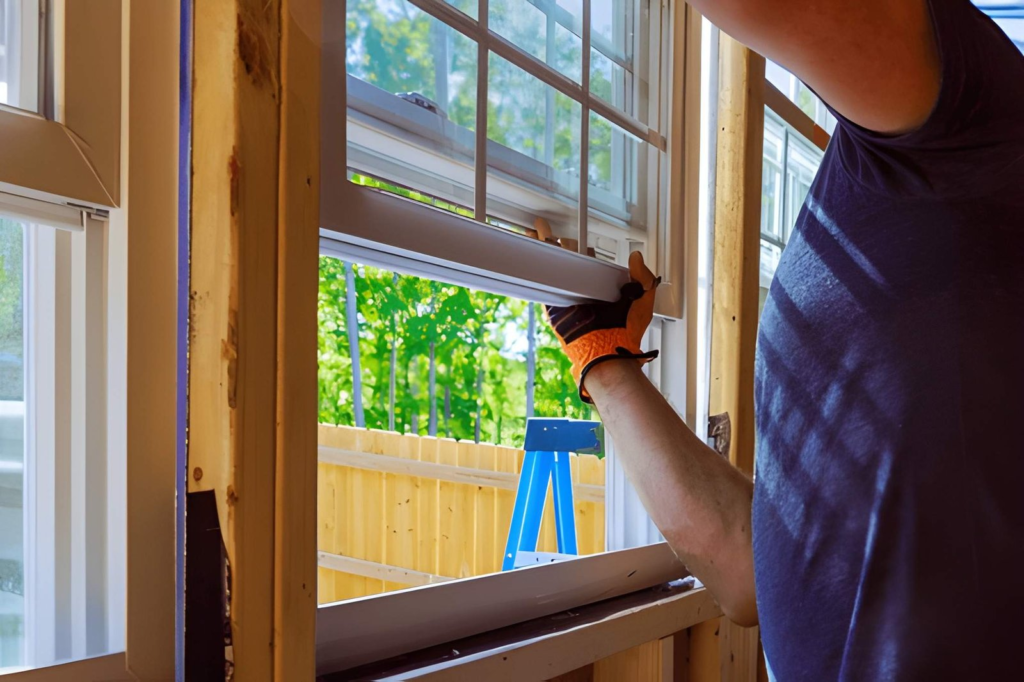
But as with any repair or improvement in the home, there are often perceived worst case scenarios that can actually end up being much worse than the reality. This is especially true when it comes to window replacement. Homeowners can often find that a simple repair can take only hours or days to complete, whereas a full window replacement can typically take 1 to 2 days to complete, depending on the size of the crew and the extent of the job. The vast majority of work is completed from the outside of the home, and homeowners are not typically left to deal with a large amount of interior work, unless the windows had previously been covered up by interior trim, or the homeowner had previously completed interior work to the window surround.
As one heads north in climate, the decisions about timing of window replacement and types of windows become more complex. Those planning window replacement Pennsylvania need to know that the freeze/thaw cycles that occur in the winter will bring greater stress to the frames and seals of windows than do the changes in temperature and humidity found in temperate climates. In addition, there is great variation in the energy efficiency of the many different products available. It is wise to get a local contractor to explain the specifics of the various products and to inspect your home to see first hand the effects of the climate on your home.
The mistake almost everyone makes
So to sum up and explain a common error that many homeowners make – they wait too long to replace their windows and then suddenly want them all replaced as quickly as possible. As a result, they do not do their homework as far as comparing the different types of replacement windows, which are available in the market today. In reality, just because a window looks good, does not mean that it will perform well for you. A homeowner needs to compare the different models of replacement windows on the basis of their energy efficiency, i.e. their U-factor, their air leakage, and also the way in which they are installed, such as how well the installer seals the area around the window frame with air tightness material.
Take your time to choose the correct windows for your home and check out the energy efficiency ratings and how the installer will seal the air between the window frame and the surrounding exterior building walls. These items can be very boring to research, but they are very important.
Yes, there are instances in which an older aluminum window may be considered for repair as well as instances in which an older aluminum window should be considered for replacement. In the end, even though aluminum windows can be repaired, aluminum also conducts cold very efficiently, which makes it that even repaired aluminum windows can be somewhat poor performers in very cold weather. But in the end, even though some aluminum windows may be suitable for repair and other not, there is often a fine line and it is up to the homeowner and the contractor to determine whether or not to repair or replace an older aluminum window.
Windows: Additional Considerations for Homeowners
- Get at least two quotes, and make sure they’re comparing the same product specs — not just the total price.
- Ask whether permits are required in your area. Some jurisdictions require them for full-frame replacements, and skipping this step can create headaches when you sell.
- Check for utility rebates. Energy-efficient windows sometimes qualify for state or local programs that can meaningfully offset the cost.
- Understand the warranty. Glass, frame, and installation warranties are often separate documents covering different things for different durations.
As far as window replacement goes, because most households contain many windows, a well-installed household of replacement windows could potentially save a lot of money and prevent water damage to the rest of the house. As for appreciation, a well-installed household of replacement windows typically appreciates in value over time, whereas a house filled with old windows, including those that are leaky, damaged or inefficient, will typically depreciate in value. In terms of being a positive or negative factor when trying to sell a house, it is typically the old house negative factor or “detester” and therefore not something that most people want to draw attention to during the time that they are trying to sell their home. House improvement projects vary greatly in terms of value returned on investment. This is one that typically does!
for more home upgrading https://decoratoradvice.ca/