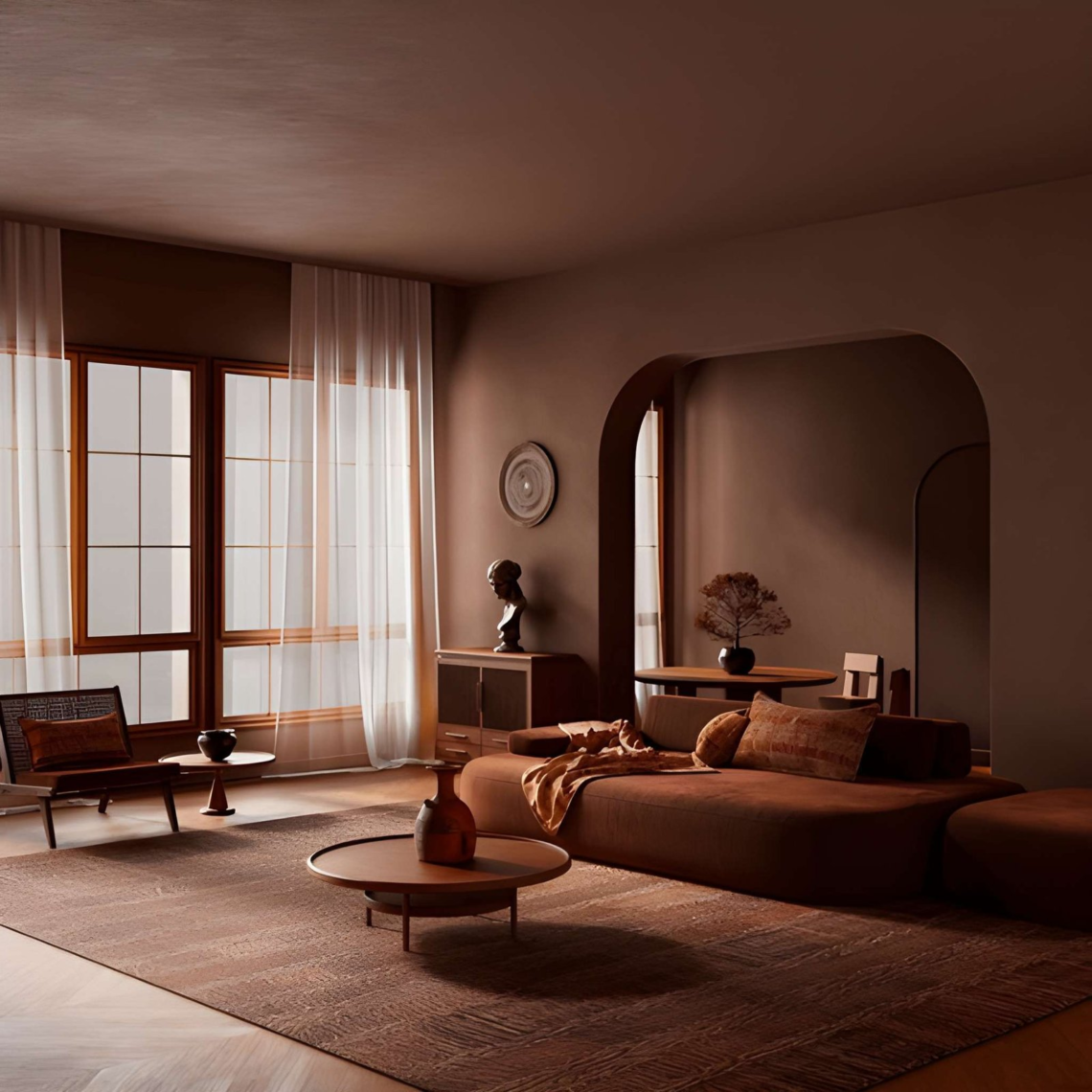
Some rooms just feel right. You walk in and your shoulders drop. Nothing’s fighting for attention, the light is doing something useful, and the furniture looks like it actually belongs there. That doesn’t come from spending more money. It comes from making better decisions — and in 2026, the decisions that work look quite different from even two years ago.
American homeowners are done with rooms that look good in photos but don’t work on a Tuesday night. After years of buying fast, cheap, and trend-first, the correction is happening. People want spaces that hold up — to daily life, to kids, to a resale market that’s gotten harder to predict. Interior styling in 2026 is quieter, more considered, and a lot more personal.
2026 Interior Styling Trends by Decoratoradvice: Fast Reference Table
| # | Trend | Best Room | Effort | |
| 1 | Warm Minimalism | Living Room, Bedroom | Low | |
| 2 | Curved Furniture | Living Room | Medium | |
| 3 | Layered Lighting | Any | Medium | |
| 4 | Natural Stone | Kitchen, Bath | High | |
| 5 | Biophilic Materials | Any | Low | |
| 6 | Japandi | Bedroom, Study | Low | |
| 7 | Statement Ceilings | Living, Dining | High | |
| 8 | Integrated Smart Home | Whole House | High | |
| 9 | Vintage-Modern Mix | Any | Medium | |
| 10 | Earth Tones | Any | Low |
The 10 Trends Worth Your Attention
1. Warm Minimalism
Cold minimalism — white walls, bare floors, one sad plant — had a long run. The 2026 version keeps the restraint but adds texture: linen cushions, warm wood, a clay pot that someone bought from an actual maker. Fewer things, but the things that stay actually do something.
It’s the most budget-friendly direction on this list. You’re removing more than you’re buying.
2. Curved Furniture
Rounded sofas, arched mirrors, oval coffee tables. Curves make rooms feel less guarded. After a decade of angular frames and hard edges, this is a natural correction — and it’s showing up at every price point, from CB2 to custom upholstery shops.
One caveat: curves work in rooms with enough floor space to let them breathe. In a tight layout, a round sofa can feel like it’s eating the room.
3. Layered Lighting
One overhead fixture is not a lighting plan. In 2026, interior styling that actually works treats lighting in three layers: ambient (ceiling), task (under cabinets, desk), and accent (sconces, floor lamps). The result is a room that shifts mood across the day without any renovation required — just new fixtures and a couple of smart dimmers.
This is also one of the highest-ROI changes you can make before selling. Staging photographers will thank you.
4. Natural Stone Surfaces
Engineered quartz had a good decade. It’s durable, consistent, and easier to maintain than natural stone. It also looks like engineered quartz, which is increasingly obvious next to the real thing.
Travertine, slate, and veined marble are back — flaws and all. A good decoration tip here: let the stone be the loudest thing in the room. Keep everything around it simple.
5. Biophilic Materials
Not just plants. Biophilic interior styling in 2026 means the materials themselves come from the natural world — raw linen, jute, unsealed wood, stone aggregate floors. The idea is that rooms built from natural materials feel less depleting to spend time in. There’s enough research behind this now that it’s stopped being a trend and started being a design principle.
6. Japandi
The Japan-Scandinavia hybrid is still going. Low furniture, neutral palettes, functional objects that are also objects worth looking at. It works in a 500-square-foot apartment and a 3,000-square-foot house, which is rare for any design direction.
The version showing up in 2026 US homes is less strict than the original — warmer tones, more texture, fewer perfectly empty surfaces.
7. Statement Ceilings
The ceiling is the one surface in a room that nobody’s competing with. No furniture, no foot traffic, no wear. Painting it a deep color, papering it, cladding it in wood — any of these does more visual work per dollar than most furniture purchases.
If you’re doing a renovation and have budget to spend in one place, look up.
8. Integrated Smart Home Technology
The smart home features people actually want in 2026 are the ones you can’t see. Motorized shades that adjust with daylight. Speakers built into the architecture. A thermostat that sits flush with the wall instead of jutting out like an afterthought. Smart home technology that requires you to look at it has stopped feeling modern and started feeling cluttered.
The integration question — how does this fit into the room’s design, not just its wiring? — is now part of the brief on most serious renovation projects.
9. Vintage-Modern Mix
One well-chosen antique piece in an otherwise contemporary room does something no amount of matching furniture can replicate. It creates tension. It suggests the room was accumulated rather than ordered from a catalog.
The piece doesn’t have to be expensive. A vintage armchair reupholstered in a current fabric. A mid-century credenza under a modern TV. The mix reads as confident and considered because it is.
10. Earth Tones
Terracotta, warm ochre, clay, moss green, deep sand. These are replacing the gray-beige monopoly that dominated US interiors for the better part of ten years. Earth tones work with changing light — they read warm in the morning and grounded at night. They’re also more forgiving than gray, which turns cold the moment the sun goes down.
Try It vs. Skip It: Side-by-Side
| Look | 2026 Verdict | Why |
| Warm Minimalism | ✅ Try It | Longevity, low spend, high livability |
| Biophilic Materials | ✅ Try It | Backed by wellbeing data, not going away |
| Earth Tones | ✅ Try It | Flexible, warm, doesn’t date fast |
| Japandi | ✅ Try It | Scales to any room size |
| All-White Interiors | ❌ Leave It | Shows everything, ages poorly |
| Industrial Pipe Shelving | ❌ Leave It | Peaked 2014, now reads as a time stamp |
| All-Gray Palettes | ❌ Leave It | Cold, flat, overused for a decade |
3 Looks to Stop Chasing
❌ All-White Interiors
White walls, white counters, white furniture. It was clean and it was smart — for staging an empty house to sell in 2016. As a living environment, it shows every mark, feels cold in northern states, and photographs identically to every other white room anyone has ever posted. Move on.
❌ Industrial Pipe Shelving
Black iron pipes holding reclaimed wood shelves. This look had a genuine moment. Coffee shops, Brooklyn apartments, home offices in 2013. It’s now so associated with that specific era that it dates a room on sight.
❌ All-Gray Palettes
Gray goes with everything and offends nobody, which is exactly why rooms styled in only gray shades feel like airport lounges. These decoration tips apply directly: introduce one warm undertone — a single earthy cushion, a wood shelf — and the whole room reads differently.
What This Means Practically
Not every trend on this list needs to live in your home. Interior styling decisions that hold up longest are the ones solving a real problem in your specific space — a room that feels dark, a layout that doesn’t flow, a bedroom that never quite settled.
Use trends as a vocabulary for what you want. Then buy once, buy right, and stop replacing things every two years.
FAQ: Interior Styling in 2026
What is interior styling? Interior styling is the process of selecting and arranging furniture, lighting, color, and objects within a space to make it both functional and visually intentional.
What are the top interior styling trends in the US for 2026? Warm minimalism, biophilic materials, and earth tone colorways are the three most consistent directions across US design markets in 2026.
Is Japandi still a relevant design style in 2026? Yes. Japandi remains one of the more durable directions in interior styling because it prioritizes function and longevity rather than novelty.
What interior design trends are over in 2026? All-white interiors, industrial pipe shelving, and gray-only palettes are the three looks most designers are moving clients away from this year.
How many times should I update my home’s interior styling? Most designers recommend a full refresh every 7–10 years, with smaller updates (lighting, soft furnishings, accent colors) every 3–4 years.
for more styling tips visit our website https://decoratoradvice.ca/