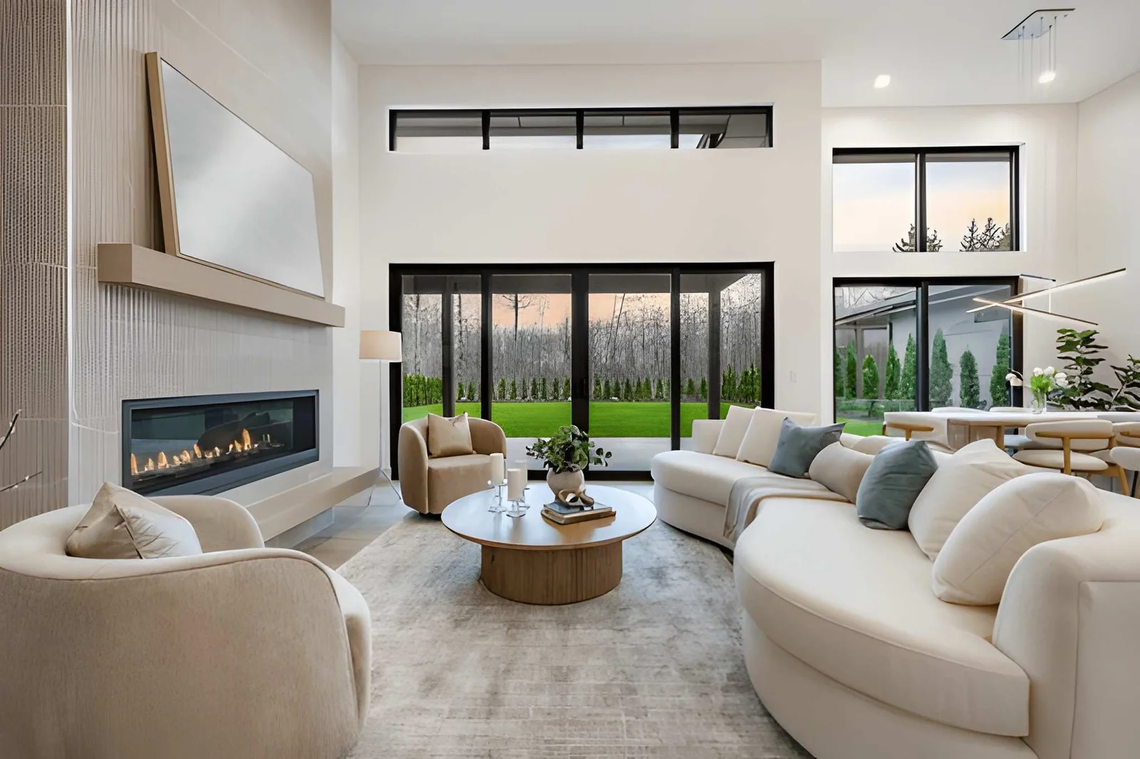
Every few years, the dominant aesthetic in US home design shifts visibly enough that rooms decorated in the previous cycle start to look dated. The all-grey kitchen that felt sophisticated in 2017. The shiplap accent wall that was everywhere by 2019. The beige-and-white everything that peaked around 2022. Each of these had a moment of feeling current, aspirational, and right — and then, without the design itself changing at all, started to feel like a timestamp.
This isn’t inevitable. There’s a real and learnable distinction between decorating in a way that dates and decorating in a way that deepens over time — between a home that looks like it was done at a specific moment and a timeless home that simply looks considered whenever you encounter it.
The difference isn’t about avoiding all trends. It’s about understanding which decisions carry trend risk and which don’t — which choices date quickly and which ones age gracefully. A timeless home isn’t a style. It’s a decision-making approach applied consistently across the choices that determine how a home looks and functions ten or twenty years from its last significant update.
This article covers exactly what makes a timeless home, how to identify trend risk in decoration decisions, and how US homeowners can build spaces designed to stay relevant rather than require perpetual updating.
What Makes a Home Timeless vs. Trendy
The distinction between a timeless home and a trendy one isn’t visible in any single element — it’s visible in the pattern of decisions across all elements.
| Decision Type | Timeless Home Approach | Trendy Home Approach |
|---|---|---|
| Color palette | Enduring neutrals or personal color with strong reasoning | Current trending palette regardless of personal fit |
| Material selection | Natural materials with proven longevity | Manufactured materials at peak trend popularity |
| Furniture form | Classic proportions in quality materials | Silhouettes that reflect current aesthetic moment |
| Fixture choices | Timeless finishes (brass, matte black, chrome) | Trending finishes likely to feel dated in 5 years |
| Architectural details | Add or preserve lasting character elements | Follow trending treatment without structural merit |
| Personal objects | Collected specifically, meaningfully | Purchased to match current aesthetic direction |
| Investment logic | Spend on longevity — quality over trendiness | Spend on currency — buy what’s fashionable now |
The pattern reveals a consistent principle: a timeless home makes decisions based on personal resonance, material quality, and design logic. A trendy home makes decisions based on what’s currently visible in design media — which, by definition, will become less visible as the cycle moves forward.
Where Trend Risk Is Highest in a Home
Not every design decision carries equal trend risk. Understanding which choices age quickly versus gracefully determines where caution is warranted and where confidence is appropriate.
High Trend Risk: Major Fixed Investments
The decisions with the highest trend risk are the most expensive and most permanent — which makes getting them wrong particularly costly.
Cabinet colors in kitchens are one of the most visible examples. White cabinets have cycled in and out of favor multiple times. Grey cabinets peaked and are now clearly dated in a way that was predictable given their sudden ubiquity. Natural wood-toned cabinets are current at the time of writing — which means they carry the same risk any peaked trend does.
A timeless home addresses this by choosing cabinet colors with more staying power: warm whites, off-whites, or navy that has decades of residential precedent — rather than the color at the center of current trend conversation.
Medium Trend Risk: Prominent Surface Materials
Tile patterns, countertop materials, and flooring choices carry medium trend risk — they’re expensive to change but less permanent than structural decisions, and they’re visible enough to date a space meaningfully.
| Material Category | Low Trend Risk Options | High Trend Risk Options |
|---|---|---|
| Kitchen tile | Subway tile (classic), handmade ceramic | Geometric statement patterns at trend peak |
| Countertop | Honed marble, butcher block, solid quartz | Exotic stone at peak popularity |
| Flooring | Wide-plank oak, concrete, classic stone | Trendy wood stain colors, patterned vinyl |
| Backsplash | Simple white or off-white ceramic | Trendy zellige or specific artisan tile mid-trend |
| Bathroom tile | Classic white, natural stone | Bold color or pattern during trend peak |
Low Trend Risk: Textiles and Accessories
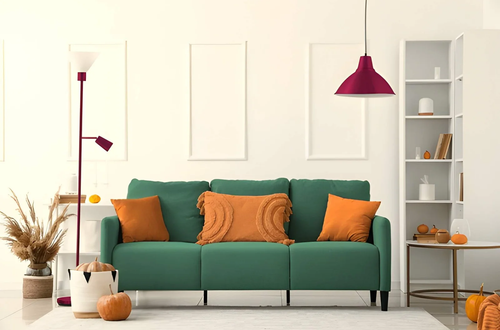
The lowest trend risk decisions are the most replaceable ones. Cushions, throws, rugs, and small decorative objects can be updated easily as taste and trends evolve — which means they’re the appropriate vehicle for trend engagement rather than large structural decisions.
A timeless home strategy uses this layer deliberately: invest in longevity at the structural level, allow trend expression at the removable level. Change the cushions seasonally. Keep the sofa for fifteen years.
The Materials That Define a Timeless Home
Natural materials consistently outperform manufactured alternatives in terms of longevity — both physical longevity and aesthetic longevity. They age differently from synthetic materials: rather than degrading, they develop patina. Rather than becoming dated, they become richer.
| Material | Why It Ages Well | Where to Use It |
|---|---|---|
| Solid oak or walnut | Develops patina, never looks cheap with age | Flooring, furniture, shelving |
| Honed marble or limestone | Improves with wear, timeless precedent | Countertops, bathroom surfaces |
| Linen and wool | Natural aging, never reads as trend-specific | Upholstery, curtains, rugs |
| Unlacquered brass | Develops natural patina over time | Fixtures, hardware, accessories |
| Handmade ceramic | Inherent uniqueness resists dating | Tiles, vessels, objects |
| Cast iron | Functional longevity measured in generations | Cookware, architectural elements |
| Natural stone | No manufactured equivalent for aging quality | Flooring, surfaces, exterior |
The investment required for natural materials is typically higher upfront. The cost over a twenty-year ownership period — accounting for replacement cycles of inferior materials — is consistently lower.
How to Evaluate Any Design Decision for Timelessness
Before any significant home investment, apply this diagnostic:
Has this material, color, or form been in continuous use for more than twenty years? If yes, it has demonstrated longevity and low trend risk. If it emerged within the last five years, it’s at or near peak trend exposure — which is the highest-risk point for a long-term investment.
Is this choice personal or social? A timeless home decision comes from a genuine personal response to a material, color, or form. A trend decision comes from the validation of seeing it everywhere else. Personal choices remain resonant as trends shift. Social choices feel increasingly arbitrary as their moment passes.
Would this choice work in multiple decade contexts? Imagine the room with this choice in 2010, 2025, and 2040. If it looks plausible in all three, the choice has timeless quality. If it looks specific to one of those periods, it carries trend risk.
Frequently Asked Questions
What is a timeless home and how is it different from a trendy one?
A timeless home is built on design decisions that remain aesthetically relevant across multiple decades rather than peaking with a specific trend cycle. The difference isn’t a particular style — it’s a decision-making approach that prioritizes personal resonance, natural materials, proven forms, and quality of construction over currency and what’s currently fashionable. A timeless home looks considered whenever you encounter it; a trendy home looks of-its-moment.
Can a timeless home still include contemporary or current elements?
Yes — the key is placement. Contemporary elements at the removable, low-commitment level (textiles, accessories, art) allow a home to feel current without risking the longevity of the structural decisions. A timeless home’s bones — materials, forms, colors in fixed surfaces — are chosen for durability. What sits on top of those bones can reflect the present moment without compromising the whole.
What’s the most common mistake US homeowners make that prevents a timeless home?
Making large, expensive, permanent decisions based on what’s currently in design media rather than on personal resonance and material longevity. The kitchen renovation that follows the trending cabinet color. The bathroom tile that was on every design blog last year. These decisions feel current at the time of installation and dated within a decade — at significant replacement cost.
Are neutral colors always the safe choice for a timeless home?
Not always — but they’re the most consistently safe choice for large fixed surfaces. The qualification is that warm neutrals (off-whites, warm greiges, natural wood tones) age better than cool neutrals (grey, blue-grey) because warm tones have longer precedent in residential design and are less closely associated with specific trend cycles. Bold colors can be timeless when they have personal resonance and historical precedent — deep navy, forest green, and warm terracotta all have decades of residential use behind them.
How do I know if I’m building a timeless home or just following current trends?
Ask whether each major decision was driven by personal response or by exposure. Did you choose this material because you genuinely love it or because you see it everywhere right now? Would you have made this choice five years ago if it had been available? Will you still love it in ten years when something else is currently fashionable? Honest answers to those questions reveal whether you’re building from personal conviction or social validation.
The Bottom Line
A timeless home isn’t a style you can purchase or a look you can replicate from a design blog. It’s the accumulated result of decisions made from personal conviction rather than trend pressure — decisions that prioritize natural materials, proven forms, quality construction, and genuine personal resonance over currency.
The practical approach is simple even if the execution requires discipline: invest in longevity at the structural level and allow trend expression at the removable level. Spend on the sofa, the floor, the fixtures — the things that stay. Refresh the cushions, the throws, the accessories — the things that can change.
A timeless home built this way doesn’t need to be redone every five years. It simply gets better — patinated, settled, and increasingly reflective of the people who’ve lived in it thoughtfully over time.
For timeless trendy homes must visit https://decoratoradvice.ca/