
Gamers spend a lot of time and money on their setups. Monitors, GPUs, mechanical keyboards, and cooling systems all get careful attention. One thing most players overlook is the water running through their home. Hard water is not a gaming topic in the usual sense, but it quietly affects the equipment, the room, and even the habits that keep you playing comfortably for hours. This guide explains what hard water is, where it shows up around a gaming space, and what you can do about it.
What is hard water?
Water becomes hard when it contains a high level of dissolved calcium and magnesium. These minerals are picked up naturally as water moves through limestone and other rock before reaching a reservoir or well. Hardness is usually measured in milligrams per litre or in grains per gallon. Water below about 60 mg/L is considered soft, while water above 120 mg/L is generally considered hard, and levels above 180 mg/L are very hard.
Hard water is not a health risk. It is a nuisance, because minerals do not stay dissolved. When water is heated or evaporates, calcium and magnesium turn into a chalky scale that sticks to surfaces.
Where hard water shows up around a gaming room
Humidifiers and diffusers. Many players run a humidifier in winter to keep the air comfortable in a closed room. Hard water fills the unit with scale and releases fine white mineral dust into the air, which can settle on screens, fans, and keyboards.
Coffee makers and kettles. Energy drinks are one choice, but plenty of players rely on coffee or tea during long sessions. Scale builds up inside heating elements, slows brewing, and changes the taste of every cup.
Water for hydration. Tap water with high mineral content can taste flat or slightly bitter. Players who drink less because the water tastes unpleasant tend to feel worse during long sessions.
Cleaning your equipment. Wiping screens and desks with tap water leaves streaks and white spots. Hard water residue is the reason many monitors look smeared after cleaning.
PC liquid cooling. This one deserves special mention. Custom loops and all-in-one coolers should never be filled with raw tap water. Dissolved minerals can corrode metals, form deposits inside the cooling block, and reduce heat transfer. Distilled water or a manufacturer approved coolant is the right choice. If you ever top up or flush a loop, hard tap water is a common cause of clogged microchannels.
Effects on the rest of the home
Beyond the gaming room, hard water causes problems throughout a house:
- Scale buildup inside water heaters, which makes them work harder and shortens their life
- Soap that does not lather well and leaves a film on skin and hair
- Spotted dishes and glassware
- Stiff, dull laundry
- Reduced flow in shower heads and faucets as scale narrows the openings
Over several years these effects add up to higher energy use and earlier appliance replacement.
How to tell whether you have hard water
Look for white crusty deposits around faucets, spots on glassware, and soap that never seems to foam. For a more precise answer, use a hardness test strip, which is inexpensive and gives a result in minutes. Your city may also publish an annual water quality report listing the typical hardness in your area. A laboratory test gives the most detailed picture, including iron and other minerals.
How a water softener works
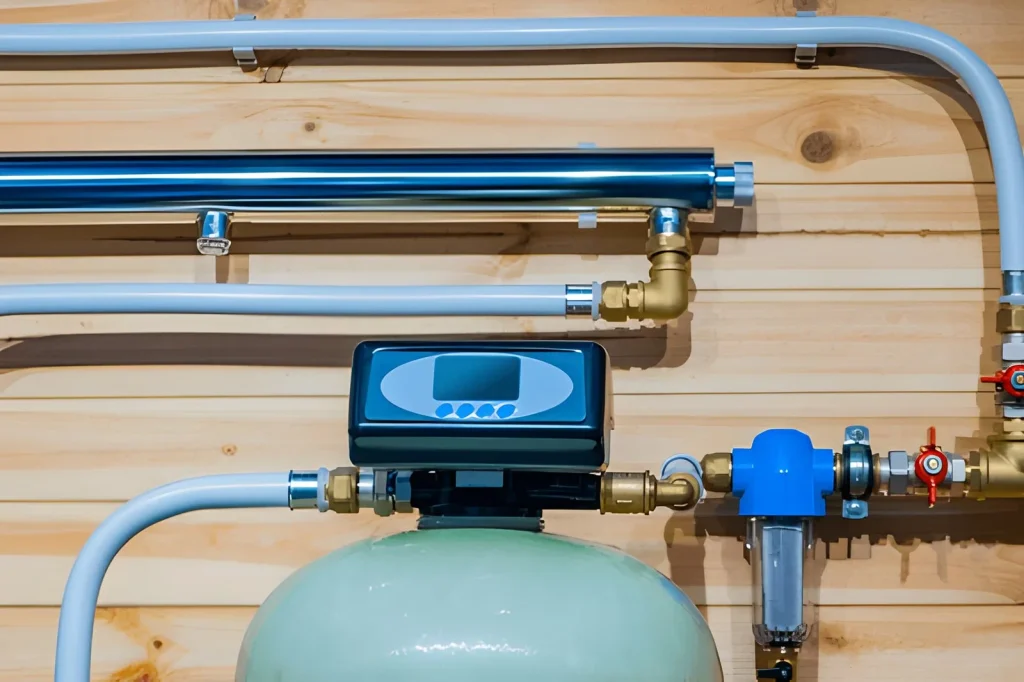
A water softener uses a process called ion exchange. Water flows through a tank filled with small resin beads that hold sodium or potassium ions. As hard water passes through, calcium and magnesium ions swap places with the sodium or potassium on the beads. The water leaving the tank contains far fewer scale-forming minerals.
Over time the resin fills with calcium and magnesium and needs to be recharged. The system does this automatically by flushing the resin with a salt brine, then rinsing the waste water to the drain. You add salt to the brine tank every so often, much like refilling a printer cartridge.
Things to consider when choosing a softener
- Know your hardness level. The system capacity should match the minerals in your water and the number of people in the home.
- Check regeneration type. Metered systems recharge based on actual water use, which saves salt and water compared with fixed timers.
- Think about drinking water. Softened water has a small amount of added sodium. Many households keep a separate unfiltered tap for drinking, or add a drinking water filter.
- Plan the installation space. A softener needs a drain connection, a power outlet, and enough room for the salt tank.
- Ask about service. Look for easy access to parts and a clear maintenance schedule.
Softening versus filtration
These are different jobs. A softener removes hardness minerals, but it does not remove chlorine, sediment, or most contaminants. A carbon filter handles taste and odour but does not soften water. Many homes use both, with a filter first and a softener after it.
A local example
Water hardness varies by region, and the right equipment depends on where you live. In the Greater Toronto Area, many homeowners look into a water softener system in Toronto, Ontario to protect heaters, appliances, and plumbing from scale buildup.
Final thoughts
Hard water will not lower your frame rate, but it can shorten the life of the appliances around your setup, spot your screens, and make daily routines slightly less pleasant. Test your water, understand your hardness level, and decide whether a softener makes sense for your home. For more background on residential water treatment, the information pages at Oaks Water are a useful place to start.Read more at https://decoratoradvice.ca/.