
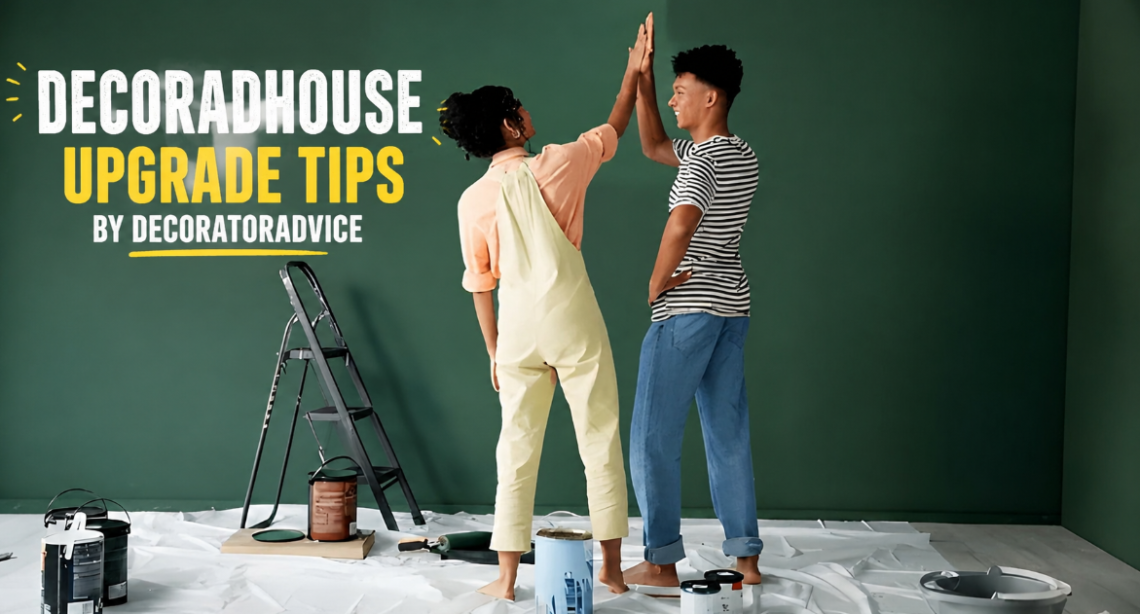
You already know about fresh paint, smart bulbs, and cabinet hardware. Every home improvement list in the Canada covers the same ground. But if you’ve done those things and your home still doesn’t feel the way you want it to — the problem isn’t the rooms. It’s the details nobody writes about.
These nine decoradhouse upgrade tips target the sensory, structural, and psychological gaps that typical advice completely skips. Not one of them involves repainting a wall or swapping fixtures. They focus on how your home sounds, how it smells, how air moves through it, what your ceiling does, and how your outdoor soil is actually affecting your curb appeal year-round.
Some of these are weekend projects. A few take an afternoon. All of them are things most canada homeowners have never considered — which is exactly why they work so well. If your home already looks fine but still feels somehow off, these are the decoradhouse upgrade tips worth trying next.
1. Treat Your Ceiling as a Fifth Wall — Not Dead Space
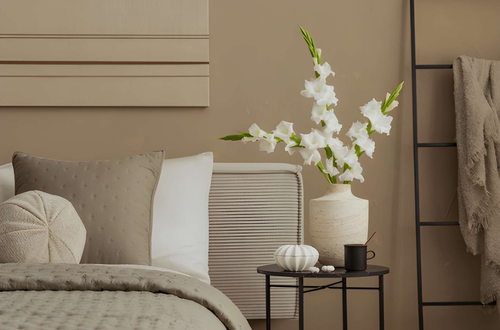
Most canada homes have flat white ceilings that do nothing. That’s a missed opportunity. A ceiling with a warm greige tone, a simple plank treatment, or even a single painted beam draws the eye up and makes rooms feel taller — not shorter, which is what most people incorrectly assume.
In rooms under 9 feet, a ceiling color just two shades darker than the walls creates depth without closing the space. Interior designers use this trick specifically in dining rooms and home offices where standard upgrades feel out of place.
| Ceiling Treatment | Avg. Cost (DIY) | Best Room | Visual Effect |
| Tinted ceiling paint | $25–$45 | Dining, office | Adds intimacy |
| Shiplap plank strips | $150–$400 | Bedroom, living | Adds texture |
| Painted beadboard | $80–$200 | Kitchen, bathroom | Cottage character |
| Single painted beam | $60–$120 | Living room | Draws eye upward |
2. Fix How Your Home Smells Before You Change How It Looks
No house upgrade tip has a faster emotional impact than scent — and almost no homeowner addresses it deliberately. Research from the Smell & Taste Treatment and Research Foundation shows that ambient scent directly affects how spacious and welcoming a space feels to visitors.
The mistake most people make is using candles or plug-ins near the entry. Instead, focus on the HVAC return vent. A few drops of essential oil on the return vent filter (cedar, white tea, or eucalyptus work well) distributes scent evenly through every room without hotspots. Swap it monthly. Cost: under $12 per year.
3. Add Sound Absorption Before You Add Anything Else to a Hard Room
Hard floors, bare walls, and tall ceilings make rooms echo — and that echo makes spaces feel cheap regardless of how expensive the furniture is. Most homeowners treat this with more decor. The actual fix is surface absorption.
Acoustic panels disguised as framed fabric art cost $40–$80 each and cut room echo by 30–50% according to NRC (Noise Reduction Coefficient) testing data. Place two panels at first-reflection points — the walls directly to the left and right of your main seating position. The room immediately sounds warmer and more contained. This is one of the decoradhouse upgrade tips that interior designers use on high-end projects but rarely explain to clients.
4. Upgrade Your Soil Before You Touch Your Garden Plants
Most canada homeowners who are unhappy with their garden spend money on new plants. The plants die or underperform. They buy more plants. The real problem in most suburban yards is compacted, nutrient-depleted soil that can’t support healthy root systems regardless of what’s planted in it.
A basic soil test kit ($15–$25 at any hardware store) reveals pH, nitrogen, and drainage issues in about 20 minutes. Amending with compost and the correct pH adjuster costs under $60 and transforms how existing plants perform — often without adding a single new one. This is the garden upgrade that makes every other garden investment actually work.
| Soil Issue | Symptom | Fix | Est. Cost |
| Low pH (acidic) | Yellow leaves, slow growth | Garden lime | $10–$20 |
| High pH (alkaline) | Iron deficiency, pale color | Sulfur granules | $10–$20 |
| Compaction | Water pooling, root stress | Core aeration | $50–$150 |
| Low nitrogen | Pale green color, sparse growth | Compost amendment | $20–$40 |
5. Use Decoration on Your Staircase Wall as a Linear Gallery
Most people hang decoration in clusters on primary walls. The staircase wall — a long diagonal run — is one of the most viewed surfaces in a two-story canada home, and almost universally ignored or treated as an afterthought.
A linear gallery along the stair rise, with frames that follow the angle of the steps at a consistent 57-inch center height, creates a curated corridor effect. Mix frame sizes but keep a single mat color — white or black — for visual coherence. The staircase becomes a feature instead of dead circulation space.
6. Install a Pressure-Balancing Valve If Your Shower Temperature Shifts
This is one of those decoradhouse upgrade tips that sits at the intersection of renovation and daily quality of life. If your shower goes cold when someone flushes a toilet or runs the dishwasher, your home is missing a pressure-balancing valve — a $25–$60 part that most post-2004 canada homes are required to have by code but older homes lack entirely.
A licensed plumber installs it in under two hours. The cost including labor runs $150–$300. The result is a shower that holds temperature regardless of what else is happening in the house. Homeowners who’ve done this describe it as one of the most satisfying single upgrades they’ve ever made — because they notice it every single day.
7. Rewire How You Think About Decoration Tips for Closets
Closets are the most used storage spaces in any canada home and the least invested in. The single highest-impact change isn’t a new organizer system — it’s lighting. Most closets run on a single overhead incandescent or no light at all.
LED strip lighting along the top shelf perimeter ($20–$40 total) combined with a motion-activated puck light at eye level transforms a closet from a dark storage pit into a functional space you can actually use. Decoration tips focused on closets consistently appear at the bottom of home improvement lists — despite closets being entered more often than most rooms.
8. Use Smart Home Occupancy Data to Redesign Your Layout
Most homeowners who add a smart home system use it for convenience — turning lights on and off remotely. Very few use the occupancy and motion data these systems generate to understand how they actually live.
After 30 days of data from a smart thermostat or motion-sensor system (Ecobee, Nest, or similar), patterns emerge: rooms that are never used in the morning, spaces that are overcrowded in the evening, areas where air circulation is consistently poor. That data is a free redesign brief. Moving a reading chair to where you actually spend time costs nothing and often matters more than any furniture purchase.
| Smart Home Data Point | What It Reveals | Free Action |
| Room occupancy by hour | Which rooms are underused | Repurpose underused space |
| Temperature variance by zone | Airflow or insulation gaps | Redirect vents or add a fan |
| Motion frequency by door | Primary vs. ignored entry points | Optimize storage placement |
| Lighting schedule patterns | Natural light peaks by room | Adjust furniture to maximize it |
9. Replace Interior Door Hinges With Soft-Close Versions
This is the most overlooked house upgrade tip in every category of home improvement content — and the one that delivers the most disproportionate impact per dollar spent.
Interior doors that slam, creak, or close too fast are a persistent irritant in most canada homes. Soft-close hinge retrofits ($8–$15 per hinge, no door removal required) eliminate slamming permanently. Two hinges per door, 30 minutes of work, and a standard screwdriver is all it takes. Visitors notice it immediately without being able to identify why the home feels more considered and quiet than others they’ve been in.
For homes with children or light sleepers, this single living room and hallway upgrade changes the acoustic texture of an entire floor. It’s cheap, invisible, and permanent — everything the best decoradhouse upgrade tips should be.
Quick-Reference: All 9 Tips at a Glance
| Tip | Category | DIY Possible? | Est. Cost | Impact Level |
| Tinted ceiling treatment | Visual | Yes | $25–$400 | High |
| HVAC scent diffusion | Sensory | Yes | Under $12/yr | High |
| Acoustic panel placement | Sound | Yes | $80–$160 | High |
| Soil testing + amendment | Garden | Yes | $15–$60 | High |
| Staircase gallery wall | Decoration | Yes | $50–$200 | Medium-High |
| Pressure-balancing valve | Renovation | No (licensed) | $150–$300 | Very High |
| Closet LED lighting | Storage | Yes | $20–$40 | High |
| Occupancy data analysis | Smart Home | Yes | $0 | Medium |
| Soft-close door hinges | Hardware | Yes | $16–$30/door | High |
FAQ
What are the most overlooked decoradhouse upgrade tips for US homeowners?
Sound absorption, ceiling treatments, and soil testing are consistently overlooked. These decoradhouse upgrade tips address sensory and structural gaps that paint, furniture, and fixtures can’t fix.
How much do these decoradhouse upgrade tips cost on average?
Most of the tips in this list cost between $12 and $300. Several — like occupancy data analysis and staircase gallery walls — cost nothing beyond materials you may already own.
Which house upgrade tip has the fastest visible impact?
HVAC scent diffusion and soft-close door hinges produce immediate, daily results from the first day of installation. Both cost under $30.
Do these tips add resale value to a home?
Tips like pressure-balancing valves, acoustic panels, and closet lighting are noted as value-adding features by real estate agents, particularly in competitive US housing markets where move-in-ready condition matters most.
for more home upgrading tips visit https://decoratoradvice.ca/

2 Comments on “9 Decoradhouse Upgrade Tips by DecoratorAdvice You Haven’t Tried Yet”