
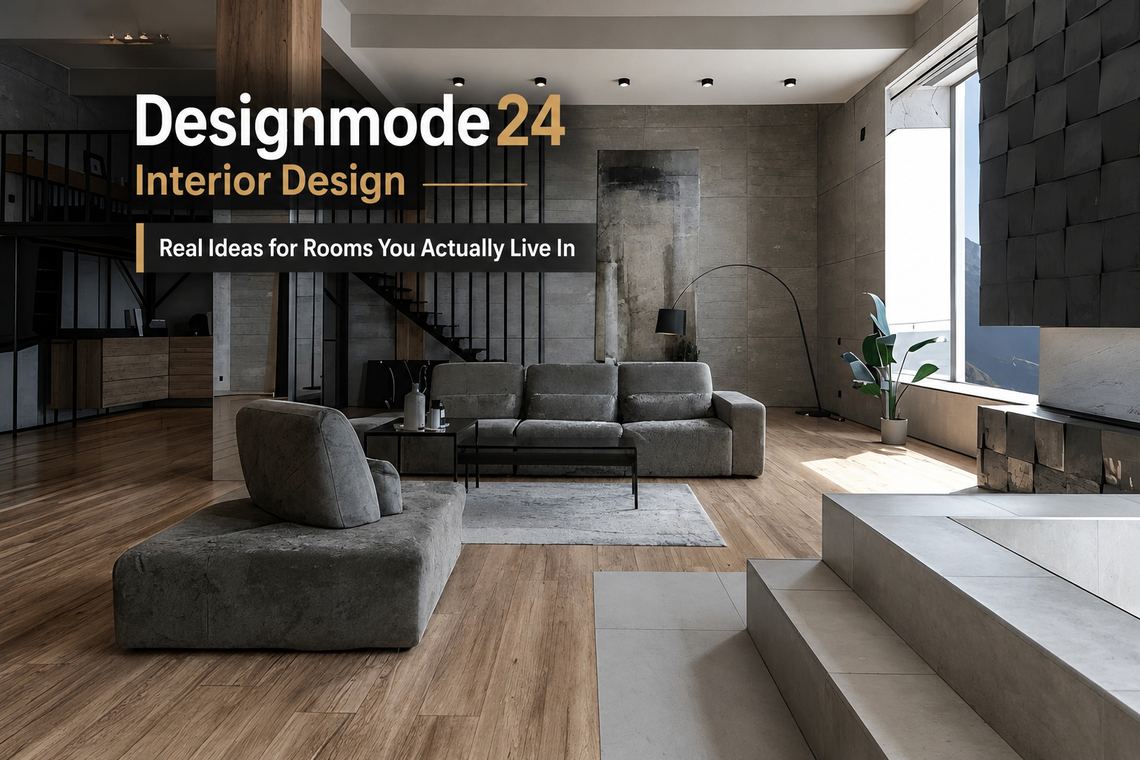
Most interior design content on the internet was written for someone with a blank canvas, an unlimited budget, and a photographer booked for Tuesday. That is not most people.
Designmode24 interior design takes a different position. Real rooms have awkward corners, mismatched furniture, landlord-beige walls, and kids who leave things on every flat surface. Good design works around those facts — it does not pretend they do not exist. This article covers exactly that: how to approach your living room, bedroom, or kitchen with a clear framework, make smarter decisions on materials and layout, and get a result that holds up past the first week. You will find room-by-room guidance, a breakdown of what actually influences how a space feels, and a few practical tables that cut through the noise. No renovation required for most of it. No interior design degree either.
What Makes a Room Feel Right — The Core Framework
Before touching a single piece of furniture, it helps to understand the three variables that control how any room feels: scale, light, and material weight.
Get these three right and almost any style works. Get them wrong and no amount of throw pillows fixes it.
| Variable | What It Controls | Common Mistake |
| Scale | Whether furniture fits the room visually and physically | Sofas too small for the wall, rugs too small for the seating area |
| Light | Mood, perceived room size, warmth vs. coolness | Single overhead fixture doing all the work |
| Material Weight | How “heavy” or “airy” a room reads | All dark wood, no contrast — or all light tones, no grounding |
The scale issue is the most overlooked. A sofa that sits two feet from the wall with space to spare does not look minimal — it looks lost. Measure your room before buying anything. Tape the furniture footprint on the floor. It takes ten minutes and prevents a $1,200 return.
Room-by-Room: What Designmode24 Interior Design Actually Recommends
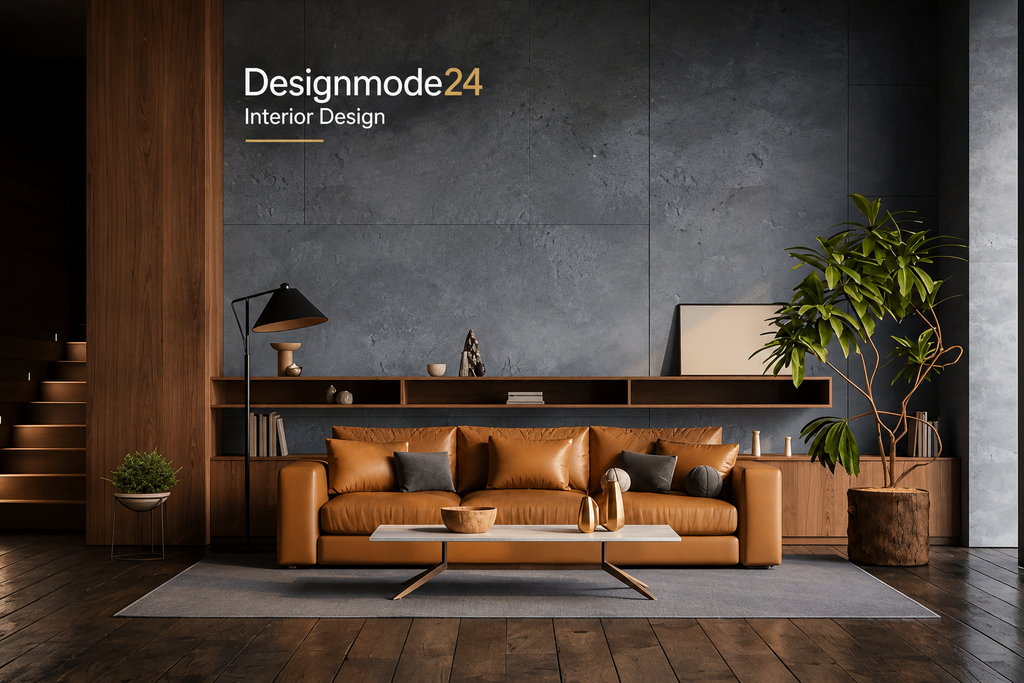
Living Room
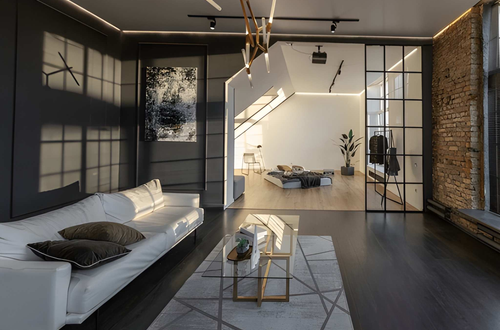
The living room is where most people start and where most mistakes happen, usually because the space tries to do too many things at once.
The one-zone rule: Pick one function as primary — conversation, TV, reading — and design around that. Secondary functions fit around the edges. A room optimized for two primary uses usually serves neither well.
For 2026, the shift is toward rounded, deeper seating. The slim-leg, thin-profile sofa that dominated the last decade looks sharp in photos and is genuinely uncomfortable after 20 minutes. Comfort is not a compromise this year — it is the point.
| Living Room Element | Budget-Smart Choice | Invest Here Instead |
| Sofa | Mid-range frame, quality fabric | Seat depth and cushion fill — this is what comfort is |
| Rug | Any flat-woven with the right size | Size first, pattern second — undersized rugs ruin rooms |
| Lighting | Skip the single overhead | Add a floor lamp and table lamp before buying any fixtures |
| Coffee table | IKEA works fine here | Skip it entirely if the room feels crowded |
Bedroom
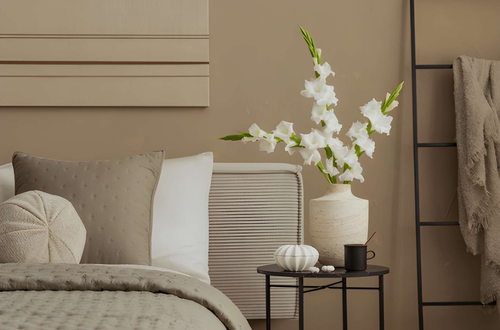
The bedroom has one job: rest. Every design decision should be evaluated against that.
That means limiting visual clutter, controlling light properly (blackout, not sheer), and choosing a bed frame that does not make the room feel like it is furniture-forward. In a small bedroom, the bed is the room. A platform bed with storage underneath solves two problems at once.
What the decoration tips on Designmode24 actually prioritize here: nightstand height matched to mattress height, bedside lighting that does not require leaving the bed, and a maximum of three visible materials so the room reads calm, not busy.
Kitchen
Most kitchen design advice focuses on renovation — new cabinets, new countertops, new appliances. But most U.S. renters and homeowners do not have that option or that budget.
The highest-impact changes that do not require a contractor:
- Swap hardware. Cabinet pulls and drawer handles are inexpensive and change the room’s entire register. Brushed brass reads warm and current. Matte black reads clean and modern.
- Fix the lighting. Under-cabinet lighting costs under $50 at most hardware stores and makes a kitchen look professionally finished.
- Edit the counter. Every appliance and item on the counter competes for visual attention. Remove anything used less than twice a week.
The 2026 Material Trends Worth Paying Attention To
Designmode24 interior design tracks what is actually gaining traction with homeowners — not just what shows up in shelter magazines.
| Material / Finish | Why It Works in 2026 | Where to Use It |
| Limewash paint | Adds texture and depth without pattern; very forgiving on imperfect walls | Accent wall, bedroom, living room focal wall |
| Handthrown ceramics | Breaks sterility; adds evidence of a human hand in the space | Open shelving, dining table centerpiece |
| Warm wood tones | Counter to the grey-everything decade; reads grounded and livable | Floors, furniture, shelving |
| Linen and bouclé | Soft, durable, photographs well, holds up to use | Sofas, chairs, throw pillows |
| Vintage or gilded frames | Adds soul to a modern room without making it feel dated | Gallery walls, mirrors, single statement piece |
The through-line: after years of polished, highly manufactured interiors, there is a real appetite for surfaces that show how they were made. That is not a passing trend — it is a correction.
Frequently Asked Questions
What is designmode24 interior design? Designmode24 interior design is a U.S.-focused design resource built around practical, livable spaces. It covers room-by-room guidance, material choices, layout logic, and design decisions that work for real homes — not just staged ones.
Do I need a big budget to improve my interior design? No. The highest-impact changes — fixing lighting, editing clutter, choosing the right rug size, swapping hardware — cost under $200 in most rooms. Renovation projects can improve a space significantly, but they are not the starting point.
What interior design style is most popular in the U.S. in 2026? Warm minimalism leads, followed by Japandi (a Japanese-Scandinavian blend), transitional, and comfort-forward contemporary. The common thread across all of them is livability over aesthetics.
How do I make a small room feel bigger? Use a correctly sized rug (larger than you think), keep the floor as clear as possible, choose furniture with visible legs, and add a mirror opposite the primary light source. Vertical lines — tall bookshelves, floor-to-ceiling curtains — also help.
What is the first step when redesigning a room? Measure. Then decide the room’s primary function. Every other decision follows from those two things.
What to Actually Do Next
Most people read design content and feel inspired, then do nothing because the gap between inspiration and action is too wide.
Here is a smaller gap: pick one room. Identify the single thing that bothers you most about it — the lighting, the furniture scale, the color, the clutter. Fix that one thing first. It costs less, teaches you more about your own preferences, and gives you a decision-making framework for everything else.
Designmode24 interior design exists for exactly this: upgrade tips that are specific enough to act on, decoration guidance that accounts for real constraints, and a perspective on design that treats your smart home as something you live in — not something you perform.
for more interior designing tips visit https://decoratoradvice.ca/


One comment on “Designmode24 Interior Design — Real Ideas for Rooms You Actually Live In”