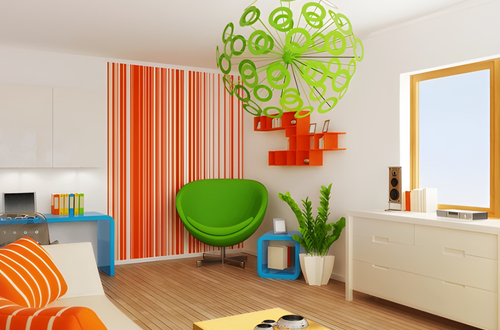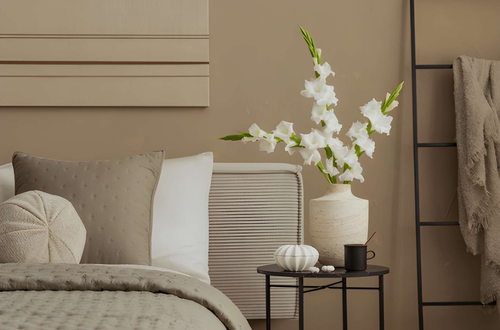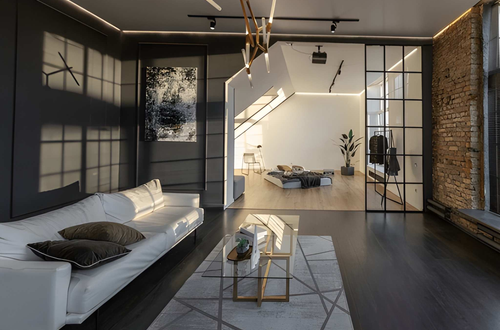
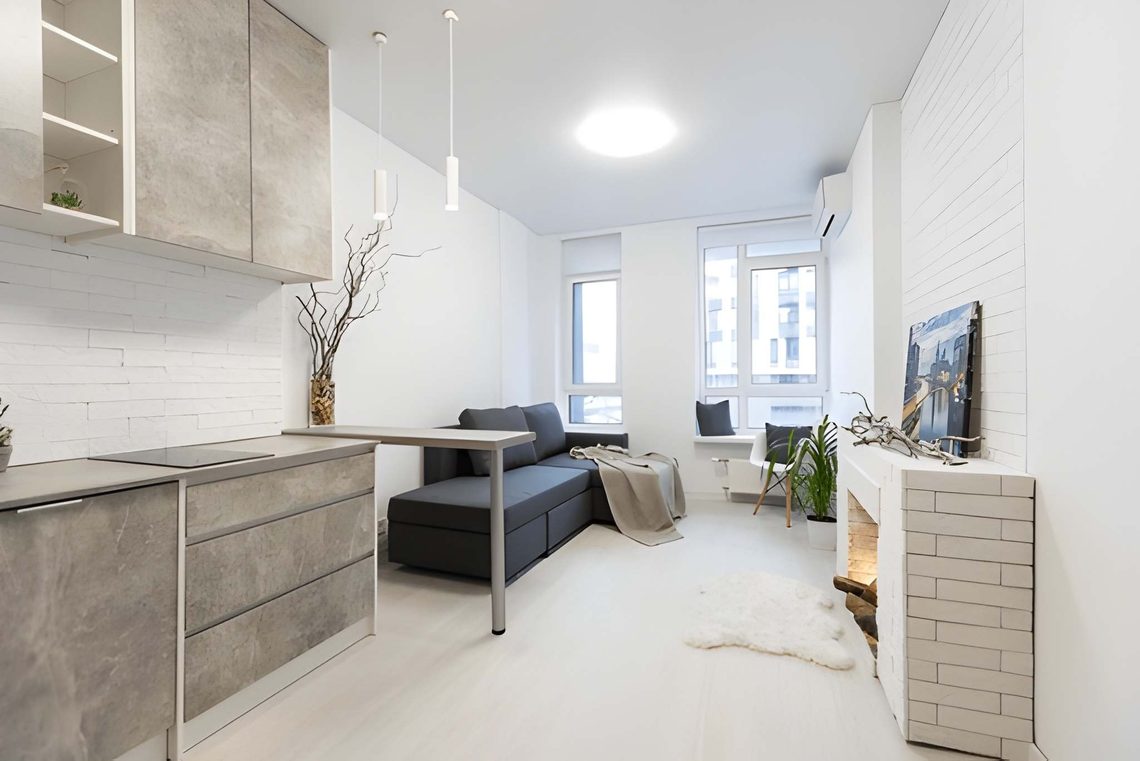
There’s a version of this problem in almost every Canadian home. The room isn’t broken. Nothing is visibly wrong. But it feels tight — like the walls are just slightly closer than they should be.
Most people have already tried the standard advice: lighter walls, less stuff, a mirror somewhere. The room still doesn’t open up. That’s because individual tips don’t fix a room working against itself. The decisions that make a small room look bigger have to work together — colour and ceiling, rug and furniture scale, light sources and vertical lines — or the effort lands flat.
This guide skips the generic checklist. It covers the specific reasons décor makes a small room look bigger or keeps it feeling small, with real measurements, Canadian home context, and a clear order to tackle changes so each one compounds the last. Whether you’re in a Vancouver condo, a Toronto semi, or a Calgary rental, this is what actually works. If you’re still building your baseline knowledge, the small home decoration tips are a solid starting point before diving into room-specific changes.
The Décor Decisions That Make a Small Room Look Bigger
Not all changes carry equal weight. Some open a room dramatically. Others are finishing touches. Knowing which is which saves money and effort.
| Décor Decision | Impact Level | What It Changes |
|---|---|---|
| Rug sized correctly | High | Anchors furniture, makes room look intentional |
| Curtains hung at ceiling height | High | Adds perceived height instantly |
| Ceiling painted same tone as walls | High | Removes the “lid” effect in low-ceiling rooms |
| Large mirror opposite a window | Medium-High | Reflects light and doubles perceived depth |
| Furniture with visible legs | Medium | Opens sightlines at floor level |
| Vertical shelving or tall bookcase | Medium | Draws eye upward, adds height |
| Matching small pieces into one larger one | Medium | Reduces visual clutter without losing function |
| Dark accent wall | Low / Negative | Pulls wall forward, shrinks room |
Start at the top. A correctly sized rug and ceiling-height curtains consistently outperform paint colour changes in rooms under 12 x 12 ft.
Colour and Ceiling: The Pairing Most People Get Half Right
Light wall colours are the advice everyone’s heard. What most people miss is the ceiling.
In a standard Canadian home with 8 ft ceilings — the default in most Toronto condos, Calgary townhouses, and Vancouver apartments — a white ceiling on a coloured wall creates a hard contrast line. The eye reads that line as the ceiling pressing down. The room feels boxed in even when the walls are pale.
Painting the ceiling the same tone as the walls, or one shade lighter, dissolves that line. The room gains height without changing a single dimension. This is one of the cheapest changes that makes a small room look bigger, and it’s almost never mentioned in surface-level advice.
What works in north-facing Canadian rooms specifically:
| Wall Direction | Paint Behaviour | Recommended Approach |
|---|---|---|
| North-facing | Cool, reads grey or muddy | Use true white or warm greige, test with swatches |
| South-facing | Bright, warm tones amplify | Cooler whites or pale greens work well |
| East-facing | Warm morning, cool afternoon | Neutral greige handles both without shifting |
| West-facing | Dim mornings, warm evenings | Warm whites look rich at night, not washed out |
Always test swatches at 30 x 30 cm directly on the wall. Check morning, midday, and evening with lights on. Colours shift more than the chip suggests. If you’re repainting as part of a larger update, renovation tips covers ceiling-to-floor paint sequencing room by room — worth reading before you buy a single tin.
Furniture Scale and Layout to Make a Small Room Look Bigger
Two furniture mistakes shrink rooms more than anything else.
Small furniture to save space backfires — a cluster of small pieces looks more cluttered than one or two well-scaled ones. A low-profile sofa at the right depth, a coffee table at two-thirds its length: these anchor the room. Many pieces competing do the opposite.
Everything against the walls leaves a dead centre and a crowded perimeter. Floating a sofa 30–45 cm off the wall creates depth the eye reads as layers. Flush placement crowds the edges and makes the room read as unresolved.
| Furniture Rule | Measurement | Why It Works |
|---|---|---|
| Coffee table length | Two-thirds of sofa length | Proportional, flow stays clear |
| Sofa depth (small room) | 85–90 cm max | Leaves circulation room |
| Sofa off the wall | 30–45 cm gap | Creates visible depth |
| Walkway clearance | Minimum 90 cm | Prevents congested feel |
| Furniture leg height | Raised, not skirted | Sightlines carry past the piece |
Rugs, Mirrors, and Light: The Final Layer
Rugs: The single fastest way to make a small room look bigger — or undo all the work above — is rug size. A rug where only the coffee table sits on it makes the furniture look unanchored and the room look unfinished. The standard that works: front legs of all seating on the rug, minimum 200 x 290 cm in a small living room. In a bedroom, extend at least 60 cm past each side of the bed.
Mirrors: A large mirror (minimum 90 x 120 cm) placed opposite a window reflects the light source and reads as a second window. A mirror facing a wall reflects a wall. Placement matters more than size. A mirror hung opposite a wall just reflects the wall — position it where the light actually is.
Lighting: One overhead fixture flattens a room. Multiple sources at different heights — a floor lamp in the far corner, a table lamp, under-shelf accent strips — push light into corners a ceiling fixture leaves dark. Dark corners shrink a room. Lit corners expand it. Smart dimmer switches — explored in depth over at smart home ideas — make switching between lighting layers practical enough that people actually use them.
Frequently Asked Questions
What is the best colour to make a small room look bigger in Canada? Soft cool whites and pale greiges consistently perform best. In north-facing rooms — common across Canadian homes — warm whites often read yellow or muddy under natural light. Test Benjamin Moore Chantilly Lace or White Dove with large swatches before committing.
Does painting the ceiling the same colour as the walls actually work? Yes — particularly in rooms with 8 ft ceilings. It removes the hard contrast line that makes ceilings feel lower than they are. Use the same colour or go one shade lighter, never darker.
Should I use a small rug in a small room to avoid overwhelming the space? No. A rug that’s too small fragments the room visually. Go larger than feels right — a 200 x 290 cm rug in a small living room anchors the furniture and makes the space feel deliberate, not cramped.
Summary
To make a small room look bigger, the changes need to work together. Paint the ceiling the same tone as the walls. Choose a rug large enough to anchor all the furniture. Float the sofa off the wall. Place a large mirror opposite a window. Add at least two light sources beyond the overhead fixture.
Each works alone. Together, they change how the room reads entirely — no load-bearing walls required. Once the interior feels right, the same system thinking applies outdoors; decoration tips covers how to extend that cohesion into your garden and exterior spaces.
for more information visit our website https://decoratoradvice.ca/