
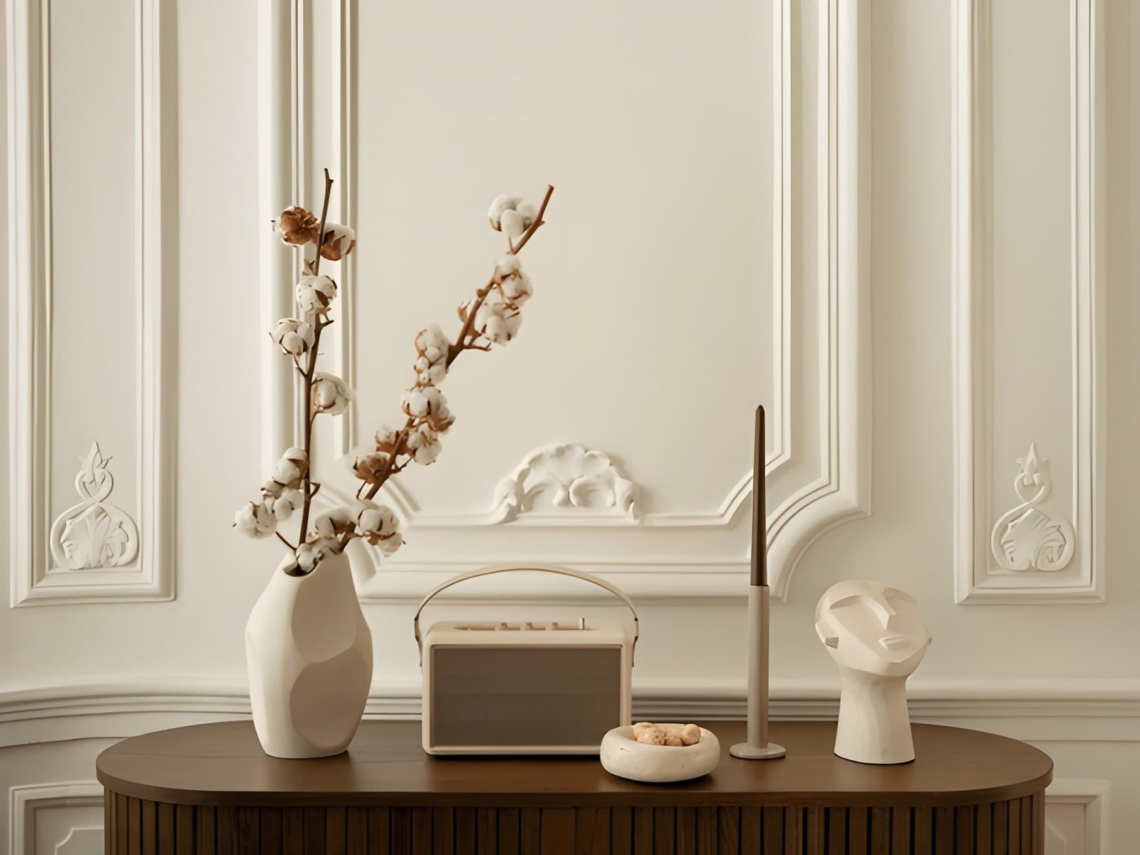
Most guides assume you’re starting with a blank-slate condo or a generous renovation budget. This one doesn’t. Whether you’re in a Toronto semi-detached, a Calgary starter home, or a Vancouver apartment where every square foot costs roughly what a compact car used to, the challenge is the same: you want the space to feel intentional, not like a game of furniture Tetris you’re slowly losing.
The good news is that making a small home feel bigger, warmer, and more livable has less to do with money than with knowing which moves actually matter. This guide covers the small home decoration tips that consistently shift how a space feels — from how light behaves in north-facing rooms to the furniture mistake almost everyone makes at least once. We’ll also look at outdoor spaces, because a back deck that feels like a real room adds more usable square footage per dollar than almost any interior project.
Why Most Small Home Decor Advice Doesn’t Stick
Generic advice says to “use mirrors” and “declutter.” Both are fine. Neither is enough on its own.
The real problems in small Canadian homes tend to cluster in three places: light that disappears in November and doesn’t come back until April, furniture that’s the wrong scale for the floor plan, and a total failure to use vertical space. Fix those three and the room responds. Leave them untouched and no amount of throw pillows will save you.
Small Home Decoration Tips That Actually Move Things
1. Scale Furniture to Your Floor Plan, Not Your Budget
This is the mistake most people make first and fix last. A large sectional in a 12×14 living room doesn’t read as cozy — it reads as blocked. A sofa that’s six inches too long changes how a whole room functions.
Before buying anything, measure your floor and map out clearances. Then stick to them.
Furniture clearances for small rooms:
| Space | Minimum Clearance | Why It Matters |
| Main walking paths | 36 inches | Keeps the room from feeling like a hallway |
| Dining table (chairs pulled out) | 36 inches | People need to sit and stand without shuffling |
| Between sofa and coffee table | 18 inches | Comfortable reach, not a leg obstacle |
| One side of the bed | 24 inches | Functional minimum for daily use |
| TV viewing distance | 1.5× screen diagonal | Better proportions and less eye strain |
Buying smaller isn’t always the answer. Sometimes buying fewer pieces — and letting each one breathe — does more than downsizing everything.
2. Light Is the Most Underused Home Ideas Tool
In Canadian winters, a single north-facing window is close to useless by 3pm. The instinct is to add floor lamps everywhere, but that just creates a glowing mess. What actually works is layering.
Three types of light in a room: ambient (the overhead), task (focused on where you work or read), and accent (aimed at a shelf, a plant, a piece of art). When all three exist, a small room feels finished. When only overhead lighting is present, it feels flat regardless of what else is in it.
Paint matters here too. In low-light rooms, the common advice to use warm whites can backfire. A cooler white — Benjamin Moore’s Chantilly Lace or Dulux’s White on White — reflects noticeably more light. Warm creams absorb it. Test a large sample before committing, especially in rooms that face north or east.
3. Vertical Space Is Square Footage You’re Not Using
Most people plan a room horizontally. Furniture across the floor, storage along the baseboards. The space from eye level to ceiling stays empty.
Floor-to-ceiling shelving draws the eye upward and makes the ceiling feel higher than it is. Curtains hung 4–6 inches above the window frame — not at it — have the same effect and cost nothing extra. A tall, narrow bookcase in a corner creates real storage without eating any floor footprint.
This applies outside too. Vertical planters along a fence or trellis are among the most practical garden tips for small backyards: they add greenery and privacy without taking up any of the ground you actually want to use.
4. Every Room Needs One Thing That Looks Deliberate
This is the anchor piece principle, and it’s one of the more reliable home decor rules for small spaces. Each room needs one element that reads as a clear choice — everything else can be simple and inexpensive around it.
In a living room, that’s usually a rug (the right size — at minimum, front legs of all the main furniture on it). In a bedroom, a headboard. In a kitchen, pendant lighting above the table or island, or updated cabinet hardware throughout.
When the anchor is wrong or missing, even a well-furnished room looks accidental.
Anchor pieces by room — strong options and budget versions:
| Room | Strong Anchor | Budget Alternative |
| Living room | Area rug, 8×10 minimum | Two layered smaller rugs |
| Bedroom | Upholstered headboard | DIY fabric panel mounted behind bed |
| Dining area | Statement pendant light | Cluster of three smaller pendants |
| Kitchen | New cabinet hardware throughout | Paint lower cabinets only |
| Bathroom | Large framed mirror | Paint the existing frame |
| Home office | Proper ergonomic chair | Focused task lighting instead |
5. Renovation Tips That Are Worth the Disruption
Full gut renovations are expensive and slow. These targeted renovation tips tend to deliver real results in small homes for a fraction of the cost:
- Swap swing doors for sliding or pocket doors. A standard interior door needs 9–14 sq ft of swing clearance. A barn door or pocket door gives that space back entirely — useful in hallways, bathrooms, and closets.
- Paint the ceiling the same colour as the walls. This sounds wrong. It works. The visual boundary between wall and ceiling disappears, and rooms read as taller.
- Enlarge a south-facing window if you can. In most Canadian climate zones, one larger south-facing window changes how a room feels from October to April more than almost any other single change.
- Open a wall between a closed kitchen and dining area. It doesn’t have to be full open-concept. A pass-through or partial removal costs less than a full renovation and makes both rooms feel substantially larger.
6. Garden Tips for Outdoor Spaces That Feel Like Rooms
Canadian outdoor seasons are short, which means the return on a well-designed outdoor space is high per usable month. A back deck or patio that feels like an extension of the home adds real square footage to your livable space without a building permit.
What works in small Canadian yards:
- Outdoor rugs define zones — dining area vs. sitting area — the same way they do inside. This is one of the simplest and most underused decoration tips for small backyards.
- Add one overhead element. A pergola, a sail shade, string lights strung between posts. Without it, outdoor furniture just sits there. With it, the space feels like somewhere you chose to be.
- Plant along fences rather than in beds that take up usable ground. In most Canadian climate zones, Karl Foerster grass, coneflowers, and serviceberry provide colour from May through October and don’t need much attention. For zone-specific planting guidance, see the garden tips.
Priority Table: Small Home Decoration Tips at a Glance
| Priority | Action | Impact | Estimated Cost (CAD) |
| High | Right-size furniture to your floor plan | Transforms daily flow immediately | $0 (rearrange what you have) |
| High | Layer lighting (ambient + task + accent) | Changes how rooms feel in every season | $50–$300 |
| High | Add one strong anchor piece per room | Makes everything else look intentional | $100–$800 |
| Medium | Hang curtains high and wide | Windows and ceilings read as larger | $80–$250 |
| Medium | Add vertical storage | Recovers square footage you weren’t using | $150–$600 |
| Medium | Build out an outdoor room | Adds seasonal livable space | $500–$2,000 |
| Lower | Door swap or kitchen pass-through | Structural space recovery | $800–$3,500 |
What Older Canadian Homes Have Working Against Them
Homes built before 1990 — and there are a lot of them in Canada — were designed around small, separated rooms. That was standard. It also means the open-concept home ideas you see on renovation shows often require actual structural work to achieve, not just a fresh eye and a weekend.
If walls can’t come down, the workaround is visual continuity: the same flooring running through adjacent rooms, a repeated accent colour, and doorways kept clear of furniture so sightlines stay open. The brain interprets connected sightlines as more space even when nothing has actually changed. It’s not a trick exactly — it’s just how spatial perception works.
Frequently Asked Questions
What is the most effective small home decoration tip for renters? Focus on light, textiles, and furniture scale — none of those need landlord approval. A correctly sized rug, curtains hung near the ceiling, and a second light source in each room will do more than any paint colour you’re not allowed to use.
How do I make a small Canadian home feel bigger without renovating? Clear your main walking paths to 36 inches. Add a second light source to every room. Move any furniture that’s blocking sightlines between rooms. Those three changes together shift how a space reads more than most people expect.
Are there small home decoration tips specific to Canadian winters? Yes. In rooms with limited southern exposure, cooler-toned whites (not warm creams) reflect significantly more light. Rooms that face south can handle deeper or warmer colours. North-facing rooms benefit from reflective surfaces: mirrors, gloss paint on trim, and metallic or glass accents rather than matte textiles everywhere.
Final Word
Small home decoration tips work best when they’re specific — to your actual floor plan, the light your rooms get, and the climate you’re dealing with for six months of the year. The changes that matter most aren’t expensive. Furniture at the right scale, proper light layering, vertical thinking, and one strong anchor piece per room will take most small Canadian homes further than a full renovation on a weak foundation.
For more on specific rooms, outdoor planning, and what’s worth spending on, explore the decoration tips, home decor, home ideas, renovation tips, and partners sections at https://decoratoradvice.ca/.



One comment on “What Are the Best Small Home Decoration Tips for Limited Space?”